

High-value patents: what are they and how to identify them?
Las patentes de gran valor: ¿qué son y cómo identificarlas?

Francisco Javier Moledo Frojan (1) and Ane Moledo Uribe (2)
Resumen
El objetivo principal de este trabajo es ofrecer las bases para una metodología de identificación de las patentes de gran valor que permita a empresas e inversores identificar las patentes que les otorguen el poder de mercado y de exclusividad que deriva de ser titular o licenciatario de una invención protegida por una patente de gran valor. Partiendo del análisis de fortaleza, condición necesaria aunque no suficiente, para que una patente pueda ser considerada de gran valor, ha de cumplir un conjunto de indicadores o estar bien posicionada en dicho conjunto de indicadores, conjunto que ha de ser capaz de reflejar el valor de las patentes como un concepto multidimensional. Todo ello ilustrado a través de un breve repaso histórico a los datos relativos a la fortaleza de las patentes, en función de las decisiones de nulidad de estas adoptadas por oficinas de patentes y tribunales, e identificando ejemplos históricos de patentes de gran valor que permitan comprender e ilustrar dicho concepto y un ejemplo de cómo evaluar una patente a través de los indicadores explicitados en el presente trabajo.
Palabras clave: Patente de alto valor, patente fuerte, indicadores patente, análisis FTO y diseñar alrededor de una patente.
Abstract
The main objective of this paper is to provide the basis for a methodology for identifying high-value patents that will allow companies and investors to identify patents that give them the market high-value and exclusivity that derives from being the owner or licensee of an invention protected by a patent highvalue. Based on the strength analysis, a necessary but not sufficient condition for a patent to be considered of high value, it must meet a set of indicators and/or be well positioned in said set of indicators; a set that must be able to reflect the value of patents as a multidimensional concept. All this is illustrated through a brief historical review of the data related to the strength of patents, based on the decisions of invalidity of these adopted by patent offices and courts, and identifying historical examples of high-value patents that allow us to understand and illustrate this concept and an example of how to evaluate a patent through the indicators explained in this work.
Keywords: High-value patent, strong patent, patent indicators, FTO analysis, and designing around a patent.
Recibido/received: 06/03/2026 Aceptado/accepted: 05/05/2026
(1) PhD in industrial engineering at the Forensic Institute of Engineering and Architecture.
(2) Undergraduate student in Industrial Technologies Engineering at Nebrija University.
Corresponding author: Francisco Javier Moledo Frojan; e-mail: fm*****@**ia.es
INTRODUCTION
A patent, an exclusive right, conferred by states, to protect a new form or functionality of an invention, can be a useful tool for a company to gain a competitive advantage in the market. However, not all patents are equal, and today, companies and investors are looking for high-value patents that give them the market high-value and exclusivity that comes from owning or licensing an invention protected by a patent high-value that grants them:
• Competitive advantage and protection, by ensuring investment in R+D, preventing third parties from reproducing the product or process, which reinforces the position in the market.
• Business value by increasing the value of the company, generating revenue through licensing, and bolstering investor confidence.
• Innovator status, since the number of high-value patents is used as a metric to measure a company’s ability to innovate.
• Strategic use, using patents to market their products or processes, block rivals, or negotiate agreements.
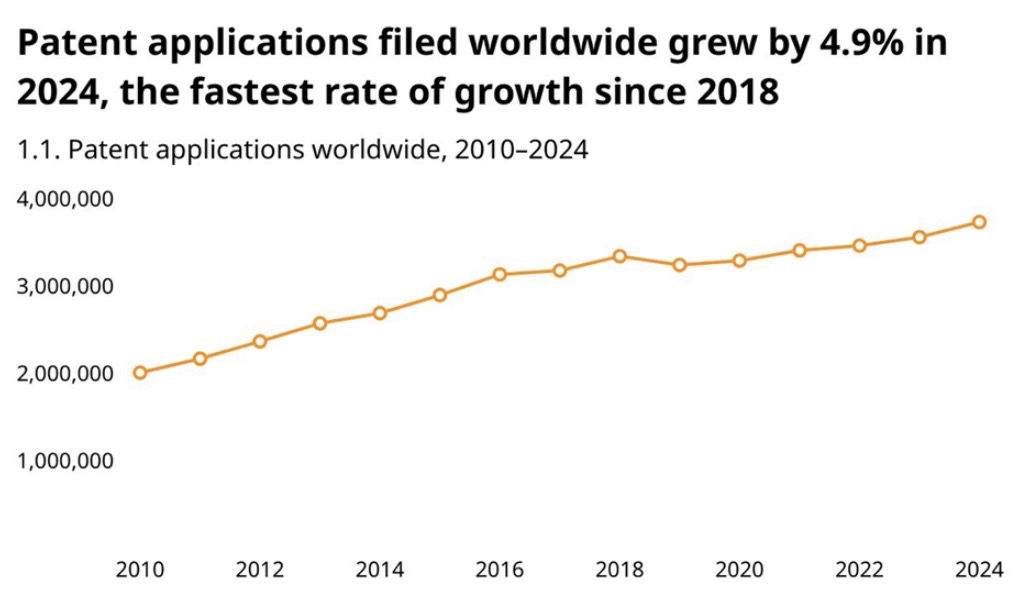
This search is not easy, firstly, because the number of patent applications has not stopped growing in recent decades -except for 2020, the year of the COVID-19 pandemic-, as it can be seen in the following figure prepared through the tools available on the website of the World Intellectual Property Office (www.wipo.int) (Figs. 1 and 2):
Secondly, because the indispensable requirement or sine qua non condition for a patent to be high value is that it be what it is called a strong patent, capable of withstanding legal challenges and preventing competitors from copying the invention.
And, in addition, the above is not enough and for a patent to be considered high-value. It must comply with a set of indicators and/ or be well positioned in said set of indicators; a set that must be able to reflect the value of patents as a multidimensional concept, given that their estimation depends on the end use, and the different interests, public and private, that are at stake, are impossible to capture with a single indicator.
In addition, the private economic value that a patent has for its owner, defined as the discounted revenue streams generated by the patent during its useful life, may be different from its social value, i.e., its contribution to the technological heritage of society, and its value as a strategic document does not have to be the same as that of the invention it protects.
Finally, in this introduction, we would like to point out the strong asymmetry in the distribution of patent value: a large part of the value is concentrated in a few patents, and the rest of the value is distributed among many patents. This asymmetry results in the need for companies and investors to identify high-value patents that grant them the market high-value and exclusivity that derives from their ownership or license.
STRONG PATENTS
Most patent offices carry out a preliminary examination of the patentability requirements of the original application (novelty, inventive step and industrial application), usually supplemented by an examination of the possible addition of subject matter in the modifications made by the applicant to the original application, but such an examination is not infallible and patent offices end up granting weak patents that are subject to annulment. Firstly, before the patent offices themselves in an administrative proceeding and, also, before the courts, in disputes over the validity of patents. Processes that are not mutually exclusive, e.g., a patent that has been confirmed in opposition proceedings before a patent office, may continue to be subject to judicial challenge of their validity.
Brief historical review of the data related to the strength of patents based on their invalidity decisions
In an empirical study carried out some time ago in the USA (Allison, et al., 1998), it is concluded that, approximately, 46% of patents granted by the American Patent and Trademark Office (USPTO) and litigated before the courts are declared invalid by the courts. It should be noted that the USPTO conducts a rather complex and competent preliminary examination on the novelty, inventive height and industrial application of the invention for which the patent is sought.
On the other hand, the patents granted by the European Patent Office (EPO) have always been generally strong because, like the US patents, they have had, since the entry into force of the European Patent Convention, a prior examination of novelty, inventive step and industrial application. However, according to a study examining 8,745 rulings issued by European national courts from 2000 to 2010 (Graham, et al., 2014), 47% of patent lawsuits include the invalidity of a European patent.
In Spain, the exact number of patents invalidity by the courts varies annually, but historical and sectoral data indicate a cancellation rate between 40% and 50% of cases that go to trial. Historically, in patent litigation in Spain, approximately half of the contested patents end up being declared invalid (in whole or in part). This figure is consistent with other European systems and the American system, and probably reflects that only those patents with weaknesses detected by competitors are litigated.
As for the administrative procedure, focusing on the European Patent Office, as an example, in 2018 the European Patent Office invalidated (revoked) 27% of the patents it had granted and for which a third party filed an opposition procedure; 32% were maintained and 41% of the patent holders had to modify them to overcome the oppositions. It should be noted that the figure is high, however, only 3.2% of all patents granted were actually opposed (EPO, Annual Report 2018). Again, the figures probably reflect that only those patents with weaknesses detected by the third-party opponents are opposed.
The concept of patent strength
The strength of a patent refers to its ability to withstand legal challenges and its effectiveness in preventing competitors from copying the invention. A strong patent is enforceable, clear and wide-ranging. Key factors that determine the strength of a patent include: • Quality of claims: claims define the scope of protection. A patent is only as strong as its claims; they must be clear, concise and broad enough to prevent competitors from designing alternatives (design around a patent).
• Novelty and inventive step: the invention must be new and not obvious to a person skilled in the art. Patents with rigorous prior art searches prior to the application will end up being stronger.
• Technical support (descriptive memory): the invention must be described in such a way that it can be reproduced by an expert in the art (sufficiency of disclosure).
• Patent strategy (portfolio): greater strength is achieved through «patent families» that cover not only the core of the invention, but also variants and improvements.
• Geographic reach: a patent valid in multiple key jurisdictions offers greater commercial and legal strength. • In contrast, the characteristics that determine the weakness of a patent are:
• Claims that are too broad and can easily be annulled because they do not meet the requirement of novelty and/or inventive step in view of the previous state of the art.
• Poor prior art searches, omitting patents and/or earlier research articles that make the invention not new and/or obvious to the subject matter expert.
• Easy to circumvent, allowing competitors, starting with an FTO (Free To Operate) analysis, to make small modifications if necessary and avoid infringement. It is the process known as design around a patent or patentevasion: the process of creating a new product, method or design that achieves the same functionality as an existing one, but without infringing the specific claims of a current patent. It is considered a legal and strategic practice that fosters competition by incentivizing inventors to seek creative alternatives.
In short, a strong patent not only protects, but will have the widest possible monopoly covering a key commercial advantage (e.g., a method or product), being able to survive opposition proceedings before the patent office where it has been granted or/and a nullity trial before the corresponding Courts.
Patent strength study
Strength studies should include both the analysis of all the prosecution files of the patent application family before the different offices, and the specific performance of relevant prior art searches that complement the searches carried out by the patent examiners of the offices where the application is processed. This is because, as already indicated, such examination is not infallible, and patent offices end up granting weak patents.
Within the analysis of the prosecution files of the patent application family before the different offices, the so-called EPO prior art reports (ETI), the EPO European Search Reports (ESR) and the WIPO International Search Reports (ISR) stand out. All of them accompanied by preliminary opinions by patent offices, on compliance with the patentability requirements of the patent application.
Another important aspect in the evaluation of this processing file is to verify that the applicant has always modified the application in such a way that the object of the modifications does not exceed the content of the application as initially submitted.
It should be borne in mind that a patent application that was initially weak, for example, with very broad claims, if the description permits, may be modified, restricting its scope, until it becomes a strong patent.
It is also desirable that such studies be carried out in accordance with the criteria and methodologies described in the guidelines for the examination of patent applications used by patent offices. In particular, the guidelines on tests for the assessment of novelty and inventive step of patent applications should be used, in our view.
Finally, it should be noted that patents that pass opposition processes and/or invalidity litigation prove to be strong that offer their holders the prospect of high profitability through licensing and commercialization.
HIGH-VALUE PATENTS
High-value patents are those that represent the core of competitive innovation in strategic sectors and generate significant economic benefits in the field of technology to which they belong, either through direct commercial exploitation, cost savings or due to the generation of royalties through licensing. It should be borne in mind that the ability of patents to ensure the attribution of the revenues generated by inventions varies from one technical field to another, for example, the percentage amount of royalties depends strongly on the gross margins of the technology sector in which the patent falls.
Moreover, not only must the value of the patent itself be high, but also the value of the underlying invention. The first comprises only the addition of the fact that the invention is patented and is defined as the difference between the value of the patented invention and the value it would have if it were not protected. The last refers to the technological content or «quality» of the invention, i.e., its contribution to the state of the art. An invention that makes a significant contribution to prior art will affect future technological developments (OECD, 2009).
Historical examples of high-value patents
Certain inventions transformed entire industries and are considered high-value patents that have left a lasting mark on society. Some of these patents are listed below chronologically:
• Samuel Morse’s electric telegraph (1840). It was one of the most important patents as it allowed the patented telegraph to transmit messages quickly. It was key to the beginning of modern telecommunications.
• Alexander Graham Bell’s telephone (1876). The telephone patent enabled voice communication over long distances, revolutionizing the way people interact and laying the foundation for modern telecommunications.
• Internal combustion engine by Nikolaus Otto (1876). It is one of the most important patents in the world. This innovation revolutionized mobility, allowing the development of automobiles, ships, and industrial machinery. Before the internal combustion engine, steam engines were dominant, but they were bulky and inefficient.
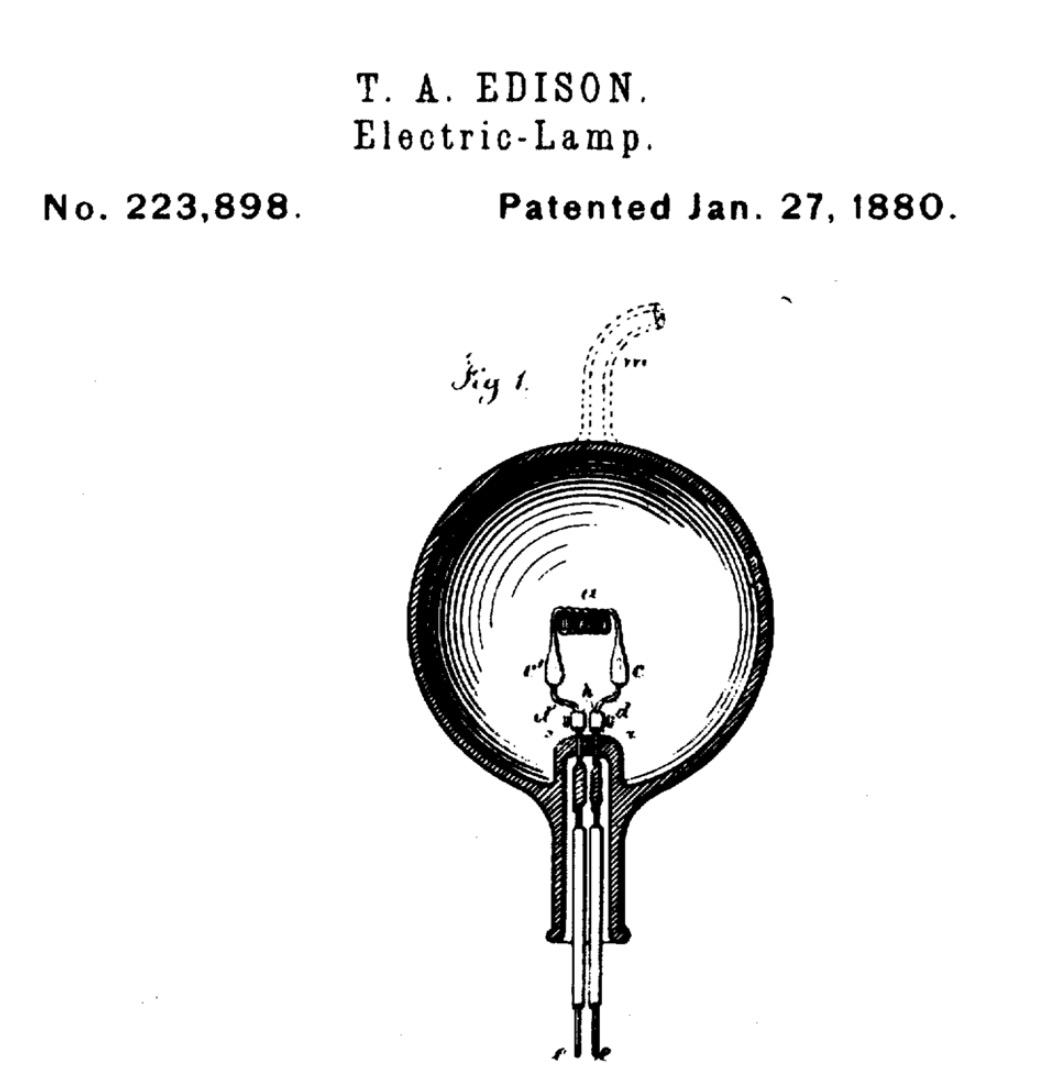
• Incandescent light bulb by Thomas Edison (1880). Edison patented the incandescent bulb, Patent US 223 898, providing a long-lasting and efficient light source. This invention replaced gas and oil lamps, illuminating homes and cities around the world (Fig. 3).
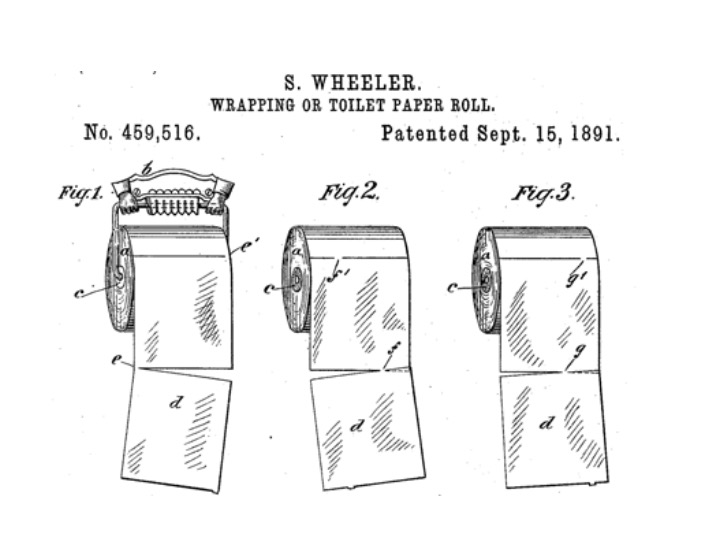
• Seth Wheeler’s toilet paper roll (1891). Patent US 459 516 shows the image of how the inventor thought the roll should be placed: the sheets of paper facing forward (Fig. 4).
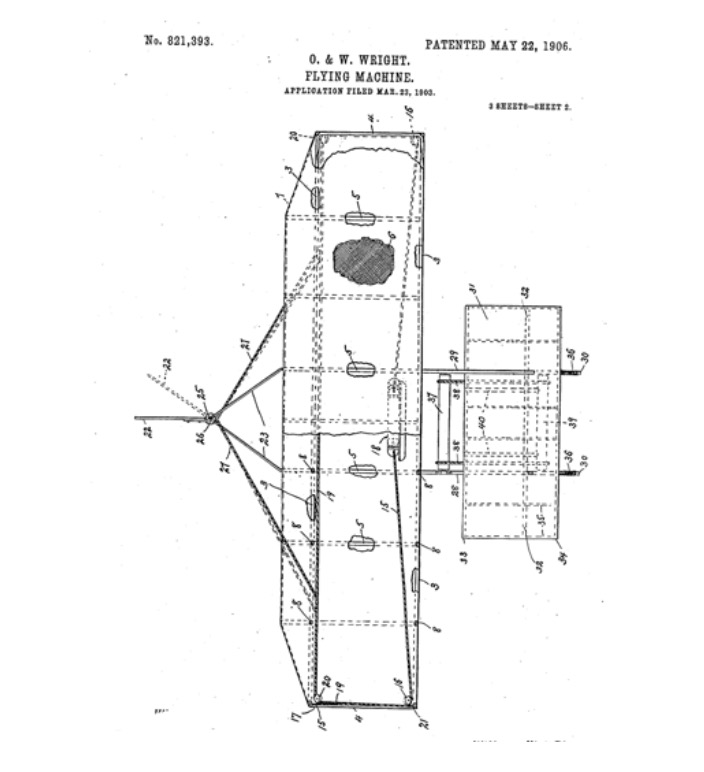
• First airplane in the history of Wilbur and Orville Wright (1906). Patent US 821 393 for the «flying machine», known as the first aircraft in history (Fig. 5).
• Mass Production of Penicillin by Florey and Chain (1940). These patents marked a crucial medical breakthrough allowing the antibiotic to be manufactured on a large scale. It was one of the most relevant patents for the treatment of infections.
• Bell Labs Transistor (1947). This device, patented in 1947, promoted electronic miniaturization. It is one of the most relevant patents in modern technology.
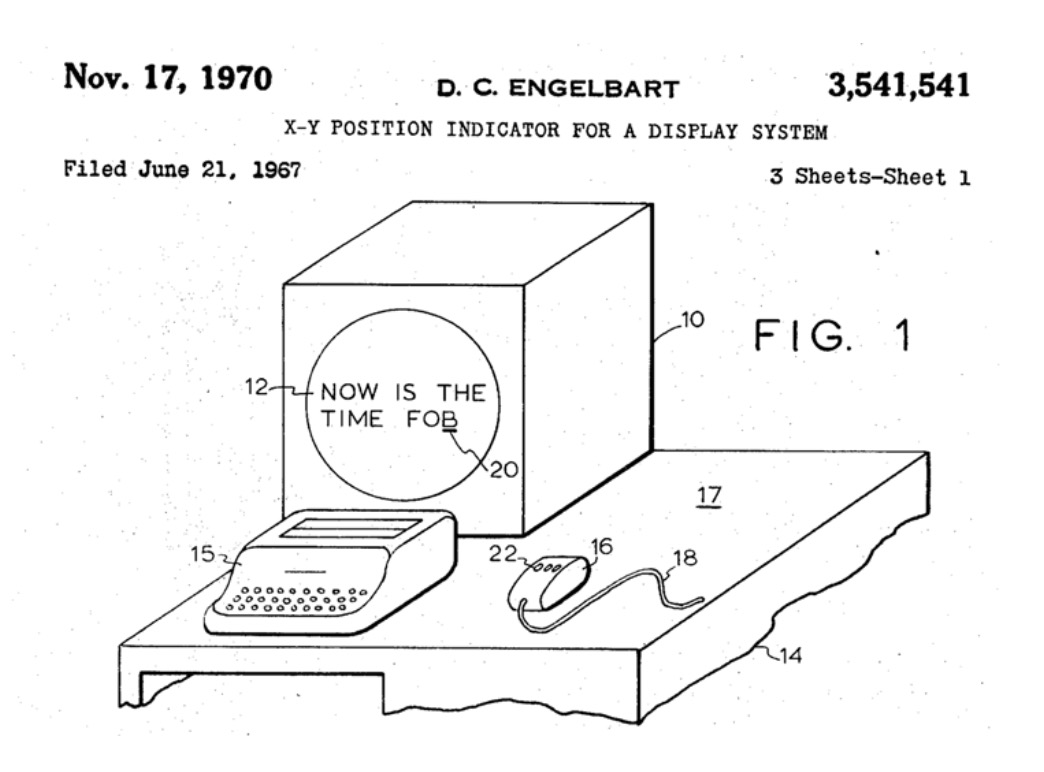
• Engelbart computer mouse (1970). The computer mouse, patented in 1970 under the number US 3 541 541 by Douglas Engelbart, served as the basis for the development of derivative technologies such as the touchpad in laptops (Fig. 6).
• Intel microprocessor (1971). The patent for the first microprocessor integrated the functions of a computer into a single chip, driving the revolution of personal computers and electronic devices.
• Toyota Prius Hybrid Vehicle (1997). Toyota patented its hybrid system in 1997. It is one of the most relevant patents in automotive sustainability.
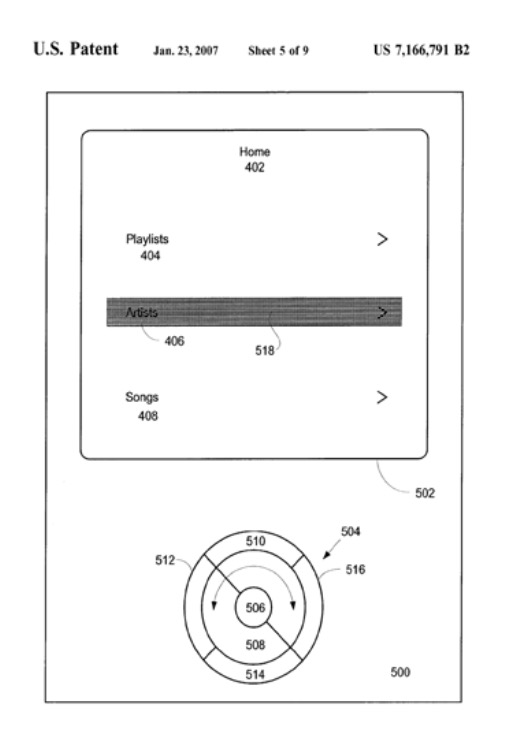
• Apple iPod (2007). In 2007, Steve Jobs received the patent for iPod No. US 7 166 791 B2 (Fig. 7).
• Massachusetts Institute of Technology CRISPR-Cas9 genome editing method (2012): A revolutionary gene-editing tool that acts as a «molecular scissors» to cut and modify the DNA of living cells with high precision.
• Tesla Autonomous Driving (2014): Tesla patented its autonomous driving system, becoming one of the most important patents in the automotive sector.
Indicators for assigning value to patents
Although the estimation of the value of a patent depends on the perspective with which it is approached and the set of indicators used, and the same patent may have different value for its holder or owner, for the competitor, for a judge in an infringement trial or a dispute over invalidity or for society in general, It is necessary to establish indicators that will allow us, even if only relatively and not in absolute value, to define and recognize high-value patents.
The first group of indicators refers to the process of examining and granting the application: among them the following are relevant:
• References to patented or scientific knowledge prior to the application, included by the applicant or examiner. The use of citations received to discuss the technological significance of patents is justified because citations in the context of patents may be provided by the applicant in the application document, to justify the novelty or inventive step of his invention, or they may be added later by the examiner. They can also be citations to their own or third-party patents. In addition to being an indicator of the value of a patent for the advancement of a technology, it serves as a foundation or inspiration for subsequent developments or points to duplications that destroy the novelty of other applications.
• Number of claims included in the application and accepted when granted. The scope of a patent is reflected in its claims and retrospective citations that define the legal boundaries of the patent with respect to prior art. The number of claims is used to represent the legal scope of patents, arguing that since each individual patent represents a set of inventive components, each reflected in a claim, the number of claims is indicative of the value of the patent as a whole.
• Number of technological classes in which the invention is classified. The number of International Patent Classification (IPC) and Cooperative Patent Classification (CPC) technical classes attributed to a patent application has also been used as a representation of its technical scope and thus of the value of the patent.
• Number of inventors of a patent. The number of inventors is related to the cost of the research underlying the invention, which in itself is statistically related to the technical value of the invention: the more resources involved, the more research-intensive the project is and the more expensive and therefore more value.
• Time spent from application to grant. The time between the application and the grant of a patent (known as the prosecution period) significantly influences its commercial, strategic and legal value. A short time increases value by providing early legal certainty and maximizing exclusivity. A long time can diminish value by generating uncertainty, but it can be used strategically to adapt the patent to the market, as long as retroactive rights are managed correctly.
Another group of indicators refers to the analysis of the patent after its grant, and are related to:
• Size of the patent family, measured by the number of patent offices where protection has been sought for the same invention, which is gradually formed from the first application, called priority, and includes divisional patents. The origin of the use of patent families as an indicator of value is based on the fact that the larger the size of a patent family, the higher the value that the holder expects to obtain from the commercialization or exploitation of family members.
• Geographical extension of the patent. the cost of extending protection increases with international extension, as the number of patent agents involved, the amount of fees to be paid to patent offices, the translations to be carried out, as well as the increase in the internal costs of the applicant’s own IP department or its external advisors. Triadic patents, those that include patents from the United States, Europe and Japan, family of patents filed for the same invention across the three major global economic markets: the United States, Europe and Japan, were considered for many years the best indicator to identify the highest-value patents since it is expensive to patent simultaneously in the three patent systems cited (Moledo, 2019). In addition, the OECD popularized the use of this indicator, by basing its studies and providing statistics on them. With the passage of time and the changes in the importance of different markets and countries, the concept of IP5 families is increasingly used by the OECD, and by the largest patent offices, which includes China and South Korea in addition to the three triadic offices and refers to the set of patent applications filed for the same invention before the five most important intellectual property offices in the world (IP5): EPO (European Patent Office), JPO ( Japan Patent Office), KIPO (Korean Intellectual Property Office), CNIPA (China National Intellectual Property Administration) and USPTO (United States Patent and Trademark Office).
• Length of patent life, measured by the maintenance fees paid by the owner to keep it active; the indicator follows the same logic of estimating the (private) value of patents in relation to the costs incurred by the applicant for extending protection over time, using the payment of patent maintenance fees at patent offices. Most patents applied for in a given year do not have much value, as they are not renewed at a term (20 years), while truly valuable patents exhaust their life length.
• Opposition and litigation, usually for infringement. Since opposing or litigating a patent are costly initiatives, it can be inferred that only those that have restrictive effects on competition and, therefore, a certain economic value, will be opposed and/or used for litigation. Therefore, the fact that a patent is opposed or used for litigation can be interpreted as a sign of its value.
Citations received from patents applied for subsequently. Subsequent citations indicate both the private and social value of inventions. The use of citations as an indicator of the technological importance of a patent follows the same logic as that of citations in bibliometric analyses, where the relevance of a scientific publication is measured by the number of citations received by subsequent works.
The use of subsequent citations as indicators of the value of patents is based, first, on the fact that they indicate the existence of research initiatives emanating from or related to the technological innovation contained in the cited patent, which indicates that money is invested in the development of the patented technology and, therefore, that there is a potential market; and second, it is based on the fact that if a particular patent is cited in subsequent applications for other patents, it indicates that the patent in question has been used by patent examiners to limit the scope of protection claimed by the owner of the subsequent patent for the benefit of society.
Patent citations to scientific articles and vice versa (patent-paper citations). Cross-citations between patents and scientific articles that establish fundamental bridges between academic research and technological development (Hammarfelt, 2021).
EXAMPLE OF A PATENT VALUE ANALYSIS
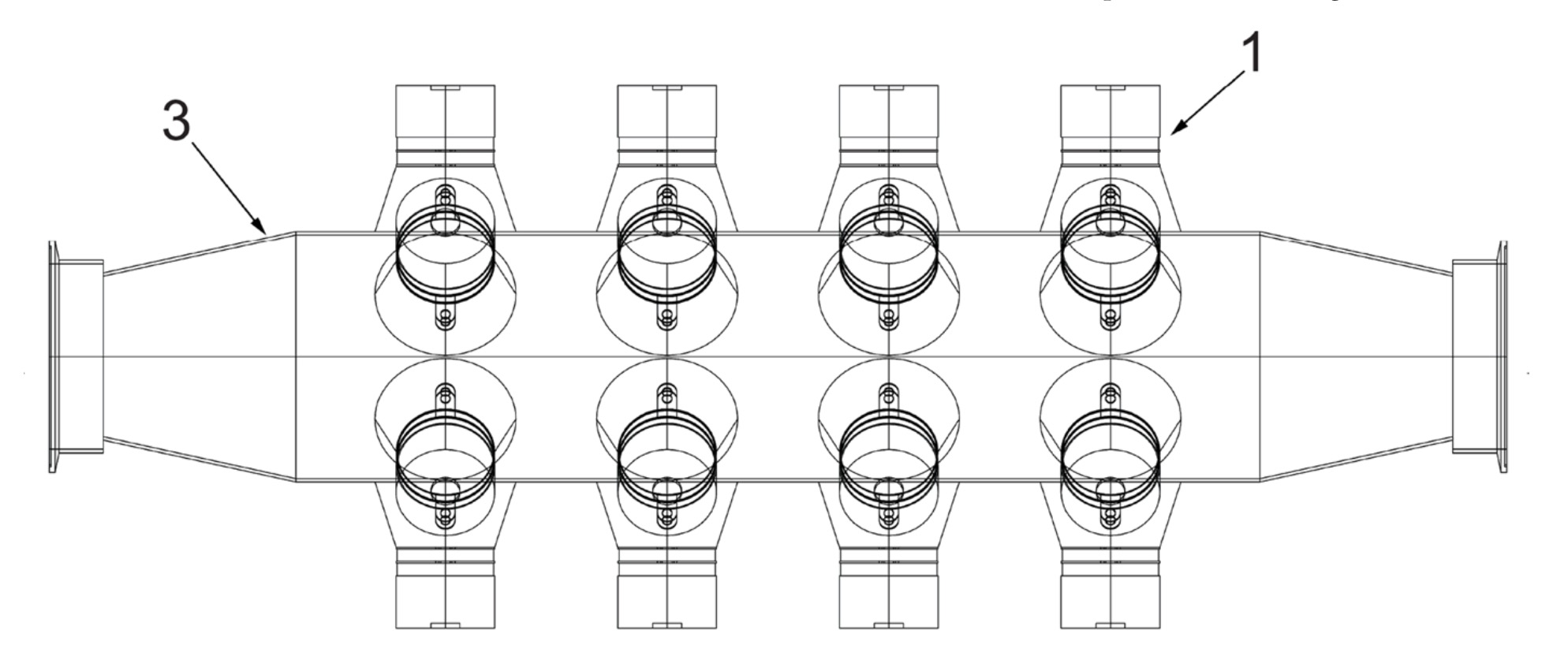
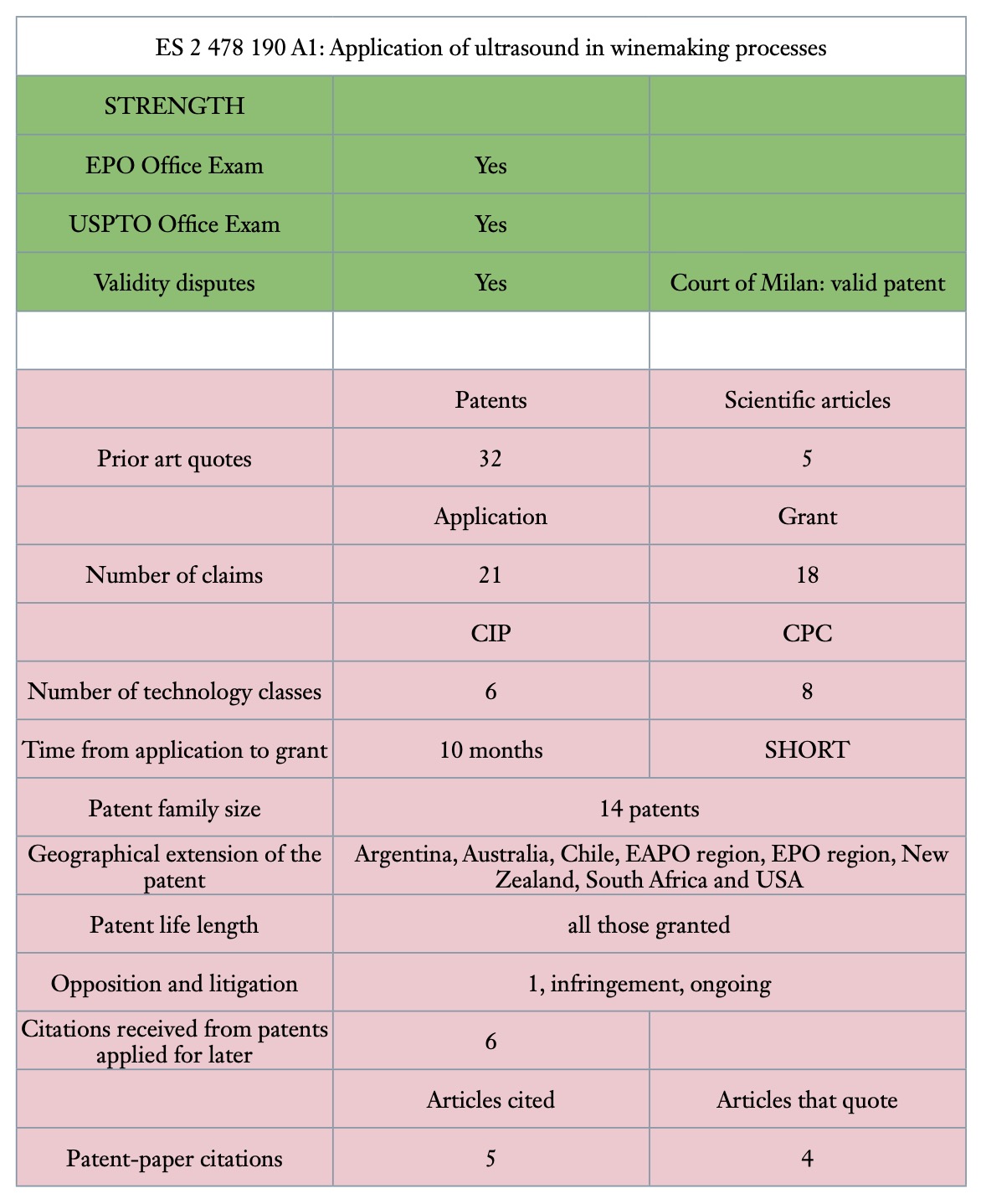
As an example of how to evaluate a patent through the indicators explained in the previous sections of this work, we analyse below the patent application ES 2 478 190 A1: relating to the application of ultrasound in winemaking processes (Fig. 8).
• Strength of the patent application ES 2 478 190 A1.The patent application ES 2 478 190 A1 passed the rigorous examination of the EPO and the USPTO; Offices that issued several examination reports that the applicant passed by including additional features, previously disclosed in the application, in the independent claims.
• In addition, the validity of one of the patents arising from patent application ES 2 478 190 A1 was endorsed by the Tribunale di Milano- Sezione civile-QUATTORDICESIMA – TRIBUNALE DELLE IMPRESE – SPECIALIZZATA PRINTED «A».
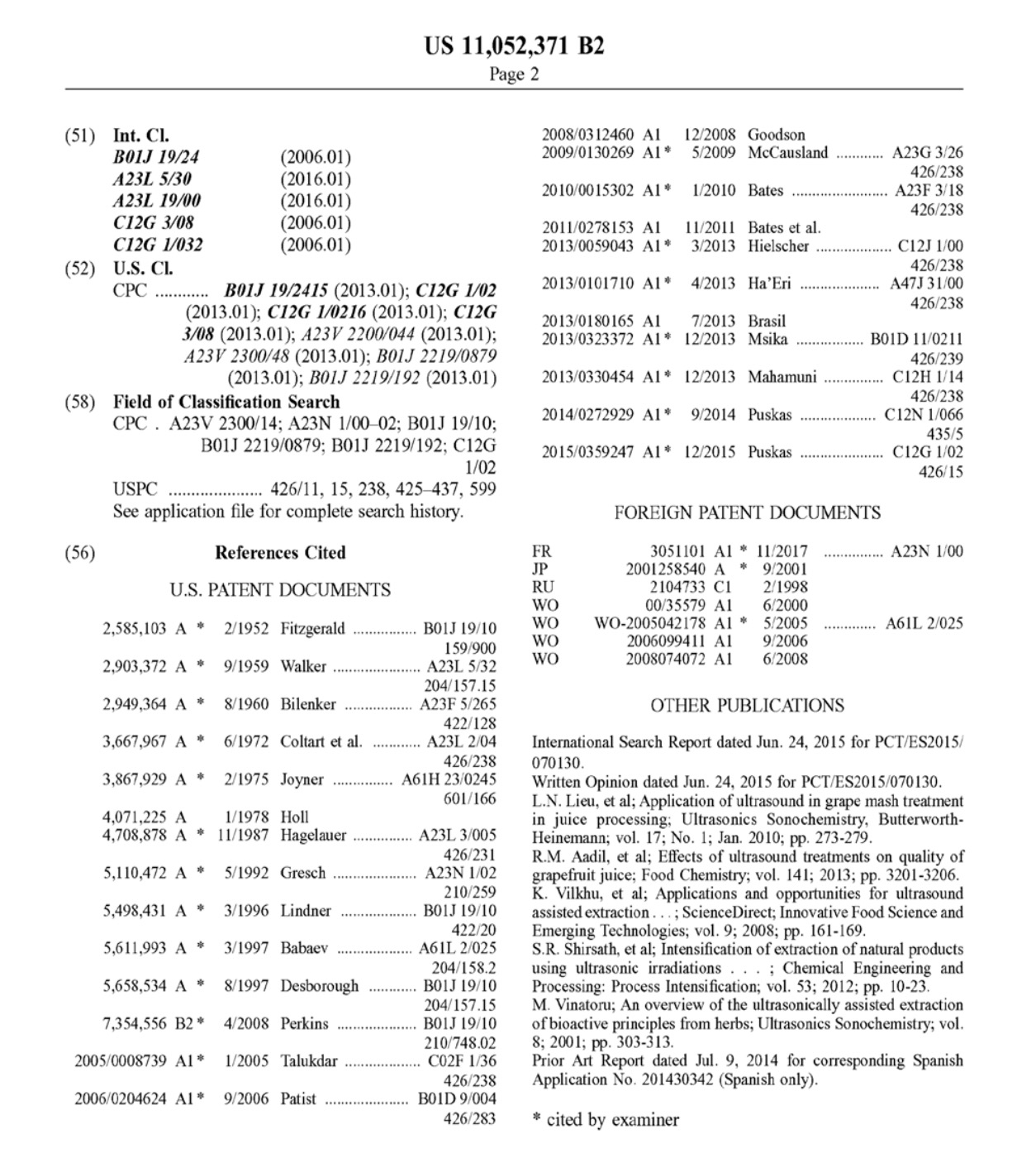
• References to previous patented or scientific knowledge. During the processing of the application, various patents and scientific articles belonging to the previous prior art were cited in the different elements of the family of the patent application ES 2 478 190 A1. We analyze as an example the patent granted in the USA, US11052371B2. As can be seen in figure 9, this patent refers to the knowledge of 32 previous patents and 5 previous scientific articles.
• The number of claims included in the patent application ES 2 478 190 A1 was 21 of which 18 were accepted when granted.
• Number of technology classes. The patent is classified into 6 technical classes of the International Patent Classification (IPC) and 8 technical classes of the Cooperative Patent Classification (CPC).
• The number of inventors in patent application ES 2 478 190 A1 is 2.
• Time spent from application to grant. The time between the application, 13.03.2014 and the grant of the patent application ES 2 478 190 A1, 21.01.2015, was a short time that provided early legal certainty.
• Size of the patent family, based on patent application ES 2 478 190 A1 14 patents have been obtained.
• Geographical extension of the patent. The Spanish patent application ES 2 478 190 A1 has been extended to Argentina, Australia, Chile, EAPO region, EPO region, New Zealand, South Africa and the USA.
• The application has not been validated before the JPO ( Japan Patent Office), nor the KIPO (Korean Intellectual Property Office), nor the CNIPA (National Intellectual Property Administration of China), we understand that, in this case, the reason is the lack of interest of those markets as they practically lack wine production.
• Patent life length: the owner continues to pay the fees for the 15 patents that make up the family.
• Opposition and litigation, currently in litigation for infringement before the TRIBUNALE DI TORINO, Sezione Specializzata in materia di Impresa.
• Citations received from patents applied for subsequently. patent application ES 2 478 190 A1 has so far received 8 subsequent patent citations.
• Patent-paper citations: through Google Scholar (https://scholar. google.es) and the Dialnet repository (https://dialnet.unirioja. es), the following scientific articles have been located in which a direct reference is made to the patent under analysis:
• Ultrasonidos de alta potencia, una tecnología innovadora y versátil de fácil implantación en bodegas. ACE: Revista de enología. ISSN-e1697-4123, Nº. 200, 2024.
• Aplicació d’ultrasons d’alta potència per escurçar els temps de maceració dels vins negres. ACE: revista d’enologia. ISSN 0212-842X, Vol. 34, No. 106, 2017, pp. 11-16.
• Extracción de compuestos fenólicos de uva tinta cv. Cabernet Sauvignon mediante ultrasonidos. Enología del siglo XXI, ISSN 2605-5465, Nº. 1, 2017, p. 48-55; Enólogos, ISSN 1695-7296, Nº. 110, 2017, p. 36-43; y, La Semana vitivinícola, ISSN 0037-184X, Nº 3509, 2017 (Ejemplar dedicado a: Anuario Técnico 2017), p. 2205- 2212.
• Un nuevo enfoque para la reducción del contenido de alcohol en los vinos tintos: el uso de ultrasonidos de alta potencia. Foods 2020, 9, 726.
The following table (Table 1) summarizes the indicators relating to the patent application ES 2 478 190 A1: Yang A, Liu C, Yang D, Lu C (2023). Electric vehicle adoption in a mature market: A case study of Norway. Journal of Transport Geography 106: 103489. https://doi.org/10.1016/j.jtrangeo.2022.103489. Yang J, Roth P, Durbin TD, Shafer MM, Hemming J, Antkiewicz, DS, Asa-Awuku A, Karavalakis G (2019). Emissions from a flex fuel GDI vehicle operating on ethanol fuels show marked contrasts in chemical, physical and toxicological characteristics as a function of ethanol content. Science of The Total Environment 683: 749-761. https://doi.org/10.1016/j.scitotenv.2019.05.279. It follows from the above that patent application ES 2 478 190 A1 is a patent of moderate high value due to the limitation in geographical extension, the uncertainty in the outcome of litigation and the average number of citations received and patent-paper citations made.
CONCLUSIONS
The strong asymmetry in the distribution of patent value is reflected in the fact that much of the value is concentrated in a few patents and the rest of the value is spread across many patents. Hence the need for companies and investors to have tools to identify high-value patents that give them the market power and exclusivity that derives from their ownership or license. High-value patents not only protect but will have the broadest possible monopoly covering a key commercial advantage (e.g., a method or product), being able to survive opposition proceedings before the patent office where it has been granted and/or a nullity trial before the corresponding Courts. High-value patents are those that represent the core of competitive innovation in strategic sectors and generate significant economic benefits in the field of technology to which they belong, either through their direct commercial exploitation, cost savings or the generation of royalties through licensing. They are strong patents and must also be well positioned in the value indicators defined throughout this article.
BIBLIOGRAPHY
Allison, John R. and Lemley, Mark A., Empirical Evidence on the Validity of Litigated Patents (July 1, 1998). American Intellectual Property Law Association (AIPLA) Quarterly Journal, Vol. 26, p. 185, 1998.
Graham, Stuart J.H. and van Zeebroeck, Nicolas, Comparing Patent Litigation Across Europe: A First Look (May 23, 2014). Stanford Technology Law Review, vol. 17, p. 655-708.
Hammarfelt, B. (2021). Linking science to technology: The «patent paper citation» and the rise of patentometrics in the 1980s. Journal of Documentation, 77(6), p. 1413-1429.
https://www.garridoydonaque.com/ blog/patentes-mas-importantes-espanolas/.
https://spanish.xinhuanet.com/.
Manual de estadísticas de patentes de la OCDE. 2009 Oficina Española de Patentes y Marcas (OEPM). ISBN: 978-84-96-11317-6.
Martínez, Catalina, El valor de las patentes en el sistema de innovación en España, ECONOMÍA INDUSTRIAL
• 433
• 2024-III (e-ISSN: 2444-4324), p. 79-91.
Moledo, Francisco-Javier y Orbezua, Gaizka. La nanotecnología en las energías renovables: análisis de aplicaciones desarrolladas, reducción de costes y derechos de propiedad industrial. TÉCNICA INDUSTRIAL, ISSN 0040-1838, nº 322, Marzo 2019.
Squicciarini, M., Dernis, H., Criscuolo, C. (2013), Measuring patent quality: Indicators of technological and economic value. Working Paper 2013/03, OECD Science, Technology and Industry Working Papers.
Patent databases
Japan Patent Office (JPO) databases. Available at: www.jpo.go.jp.
U.S. Patent and Trademark Office (USPTO) databases and site. Available at: www.uspto.gov.
Databases and website of the Spanish Patent and Trademark Office (SPTO). Available at: www.oepm. es.
European Patent Office (EPO) databases and website. Available at: www. epo.org.
International Intellectual Property Bureau databases. Available in: https:// www.wipo.int/portal/en/index. html.
PatSnap Patent Search & Analysis Service, Available in: www.patsnap. com/.
