
Reducing fuel consumption: Biofuels and high efficiency engines are becoming a real solution to mitigate transport emissions
Reducir el consumo de combustibles: Los biocombustibles y los motores de gran eficiencia pueden ser una solución real para ayudar a mitigar las emisiones en el sector del transporte

Sofía Morán (1) y Xiomar Gómez (2)
Resumen
Este documento ofrece una revisión exhaustiva de las estrategias y tecnologías actuales destinadas a descarbonizar el sector del transporte, con especial atención a los desafíos y oportunidades que plantean las nuevas regulaciones, los avances tecnológicos y los factores socioeconómicos. Examina las limitaciones de depender exclusivamente de la electrificación, y destaca la importancia continua de los vehículos híbridos y los combustibles alternativos como el biogás, el bioetanol y el biodiésel para lograr reducciones significativas en las emisiones de gases de efecto invernadero. El análisis subraya la necesidad de soluciones pragmáticas y multitecnológicas que consideren las limitaciones del mundo real, como la disponibilidad de infraestructura, el poder adquisitivo y la edad promedio de las flotas de vehículos. En el presente documento se destaca la importancia de la acción coordinada entre los responsables políticos, los fabricantes y los consumidores, y se aboga por marcos de políticas que incentiven la adopción de vehículos eficientes con base en su desempeño real en materia de emisiones. Conseguir un enfoque equilibrado y flexible, respaldado por la innovación, incentivos específicos y clasificaciones ambientales precisas es esencial para avanzar hacia la neutralidad climática, manteniendo al mismo tiempo la movilidad y la estabilidad económica.
Palabras clave: Descarbonización, biocombustibles, hibridación, motores y eficiencia.
Abstract
This document provides a comprehensive review of current strategies and technologies aimed at decarbonizing the transport sector, with a particular focus on the challenges and opportunities posed by new regulations, technological advancements, and socioeconomic factors. It examines the limitations of relying solely on electrification, highlighting the continued importance of hybrid vehicles and alternative fuels such as biogas, bioethanol, and biodiesel to achieve meaningful reductions in greenhouse gas emissions. The analysis underscores the need for pragmatic, multi-technology solutions that account for real-world constraints, including infrastructure availability, purchasing power, and the average age of vehicle fleets. In the present document it is stressed the importance of coordinated action among policymakers, manufacturers, and consumers, and calls for policy frameworks that incentivize the adoption of efficient vehicles based on actual emissions performance. A balanced, flexible approach —supported by innovation, targeted incentives, and accurate environmental classifications— is essential for advancing toward climate neutrality while maintaining mobility and economic stability.
Keywords: Decarbonization, biofuels, hybridization, engines, and efficiency.
Recibido/received: 03/10/2025
Aceptado/accepted: 10/02/2026
1 Student of Electronic Engineering. Universidad de Zaragoza: School of Engineering. C. María de Luna, 3, 50018 Zaragoza, Spain.
2 Department of Chemistry and Applied Physics, Chemical Engineering Area, Campus de Vegazana s/n, University of León, 24071 León, Spain.
Corresponding author: Xiomar Gómez; e-mail: xa****@*****on.es
1. INTRODUCTION
The ongoing rise in greenhouse gases (GHG) and their negative impacts on the global climate exert substantial pressure on politicians and policymakers to implement regulations to decrease fossil fuel consumption and increase energy efficiency. Different strategies can be implemented to reduce fossil fuel demand, such as promoting renewable energy sources, investing in advanced technologies, developing sustainable transportation options, encouraging the use of hybrid and electric vehicles, and enhancing public transportation systems. By fostering a conservation culture and supporting policies that prioritize environmental sustainability, a more sustainable energy future, one that decreases our reliance on fossil fuels, seems an achievable goal. However, the transition to a decarbonized economy presents numerous challenges, making the goal of achieving net-zero emissions increasingly difficult. The elimination of GHG emissions associated with the industrial sector, such as the cement industry, metal refining, and steel production, is not currently possible. The freight transport sector lacks a viable alternative to diesel fuel for trucks, and the electrification of heavy-duty vehicles over long distances is not currently feasible. Although some strategies, such as the attenuation of CO2 emissions through reforestation and carbon capture and storage, help avoid the accumulation of CO2 in the atmosphere, greater efforts are needed globally to achieve a significant impact on the climate. Recognizing the existing problem that some CO2 emissions are difficult to abate, the goal of achieving climate neutrality appears to be an aspirational target rather than a realistic objective. Technologies such as carbon capture and storage, as well as carbon utilization, are required to offset atmospheric CO2 from the carbon balance (Schenuit et al., 2023) but are linked to a higher energy demand and therefore an increase in the price of goods.
Data reported from Statista in 2024 (Statista, 2024) indicated that more than 80% of the global energy demand was covered by coal, oil, and gas, accounting for a total value of 301.1 MMboe daily, giving a clear idea of the challenge to be faced when considering the substitution by renewable sources if nuclear power is not brought into the scene. Real possibilities of attaining decarbonization may be blown off by reality. One of the most aggressive European measures established for reducing carbon emissions is the Fit for 55 package, which is a set of regulations intended to reduce greenhouse gas emissions by at least 55% by 2030, using as a base those produced in 1990, thus initiating a route towards climate neutrality by 2050 (Council of the European Union, n.d.). The goals of the package are ambitious and may be considered overly optimistic. In addition, a fact that should not be disregarded is the high cost associated with decarbonization technologies, and that many of them are not yet mature enough to assume that a fast and smooth transition will occur in the short term (González & Gómez, 2024). The package addresses restrictions in the transport sector by regulating CO2 emissions for passenger cars and vans, implementing new rules for alternative fuel infrastructure, and introducing new legislation applicable to the maritime and aviation sectors (Erbach & Jensen, 2024).
Regulation (EU) 2019/631 (European Parliament & Council of the European Union, 2019) is an example of the strict measures implemented to limit CO2 emissions in the transport sector. New passenger cars and vans must comply with new CO2 emission performance standards, with targets being continuously strengthened until 2030, and a 100% reduction in emissions is expected to be reached by 2035. Target levels for the period 2020-2024 were set at 95 g CO2 /km for cars and 147 g CO2 /km for vans, as measured by the NEDC emission test procedure. For the following years, that is, between 2025 and 2034, it was expected that these targets (measured on the WLTP cycle [Worldwide Harmonized Light Vehicles Test Procedure]) reached a value of 93,6 g CO2 /km (2025-2029) and reduced to 49,5 g CO2 /km (2030-2034) in the case of passenger cars (European commission, n.d.). The recent delay in applying this regulation to give a “breathing space” to car manufacturers is clear evidence of the intricate connections between the economy and GHG emissions (France24, 2025), demonstrating the need for careful assessment when implementing excessively aggressive targets that may risk one of the basic principles of the Fit for 55 package, which is based on a just transition. Efforts are being made by car manufacturers, as exemplified by the decrease in mean CO2 emissions of passenger cars registered yearly in Spain, which has dropped from 173 g CO2 /km in 2009 to 116 g CO2 /km in 2024 (ANFAC, 2024a).
The electrification of the transport sector will unfold at a different pace in the global north, based on the availability of subsidies, public acceptance, and the mean income of citizens. Solutions for reducing fuel consumption must be global and consider all variables and parameters of the equations without focusing on regions with specific characteristics that are not easily extrapolated. Therefore, electric vehicles (EVs) may be an excellent mobility option, but they are far from being considered an adequate global solution (Morán et al., 2024). Car manufacturers are making significant efforts to reduce fuel consumption and increase security for drivers and pedestrians by introducing safety driving devices in new passenger cars. These efforts, along with the devices required for pollution control, result in an unavoidable increase in car prices. These higher prices are likely one of the primary reasons for the ongoing increase in the average age of vehicle fleets worldwide. In the case of Spain, this age has increased from 8 years in 2007 to 14.5 years in 2024, one of the oldest in the European Union (ANFAC, 2024a). But the Spanish fleet is just following the same trend experienced by other countries. The average age of the U.S. fleet has increased from 11.2 years in 2012 to 14 years in 2024 (Fitzgerald, 2024). Despite the different explanations behind this phenomenon, the evident conclusion is that any efforts to implement stricter regulations have the risk of being offset by the aging of the circulating fleet.
The adoption of electric vehicles in Spain is discouraging if compared with neighboring countries, such as Portugal. In this latter country, the market shares of EVs sold in December 2024 reached an impressive value of 25.4% and the share of PHEV accounted for 12.3% (total of 37.7%) (European Alternative Fuels Observatory), whereas in Spain, the total share of EV + PHEV was 11.4% for the same month (ANFAC, 2024b). There are several causes for the low passenger car electrification rate of Spain, and many have been widely recognized and are common with those already reported by Boulanger et al. (2011), just right at the beginning of the introduction of the electric vehicle, such as range, charging access, and lack of public awareness about the availability and practicality of these vehicles. Back in 2016, Junquera et al. (2016) performed a study to analyze the purchasing intentions of the Spanish population regarding electric vehicles, reporting that price and charging times are the main adverse factors for the willingness to buy an EV, with these motives being replicated worldwide (Pamidimukkala et al., 2024). However, prices have been decreasing considerably since the date of this study. The charging infrastructure has been improved, and charging times have decreased significantly. In fact, depending on the type of EV, the sum of up-front costs, financial aids, and maintenance may currently result in a better economic balance, but EV adoption still experiences slow increments. Therefore, other reasons are behind this slow adoption and are fully complex. A possible explanation may be the aversion to financial risk and the influence exerted by the decisions made by others within the same social group (Cabeza-Ramírez et al., 2025). The rapid advances in technology may also incline the balance toward other propulsion systems, also characterized by low fuel demand. Another factor worth mentioning is the average age of the population and mean income, as reported in the study by Yang et al. (2023). The study found that younger people with higher incomes were more likely to be involved in EV purchase than the elderly population, who have lower needs for daily travel.
Given these complex challenges and the evolving landscape of decarbonization strategies in the transport sector, it is essential to assess practical solutions that can bridge the gap between current fossil fuel reliance and long-term electrification. The aim of the present document is to review current technologies capable of achieving a significant reduction in fuel consumption, which may serve as a transition towards electrification and facilitate easier extrapolation to emerging economies, thereby increasing the potential for a global decrease in transport CO2 -associated emissions.
2. EFFORTS PERFORMED BY CAR MANUFACTURERS TO REDUCE FUEL CONSUMPTION AND CO2 EMISSIONS
Car manufacturers have made significant efforts and advances in developing new propulsion systems aimed at reducing fuel consumption. Probably one of the efforts having less awareness by the population is the dif!culties associated with the loss of profitability when starting a new production plant for EVs. The transition towards an electrified vehicle «eet implies that the car manufacturer must dismantle a profitable combustion assembly line to start up an expensive EV assembly plant, which is full of uncertainties and initially operates at minimum capacity (Hancké & Mathei, 2024). Alternatives currently competing with electric vehicles include those capable of using dual fuels and hybridization, which incorporate batteries.
The development of systems based on the use of gaseous fuels such as natural gas, liquid petroleum gases and hydrogen aids in reducing fuel consumption. The use of compressed natural gas has the advantage that shares compatibility with biogas, which is derived from the anaerobic digestion of organics such as waste streams and fermentable biomass. Some examples of the technology are the Skoda Octavia model and the Skoda Scala model (Skoda, n.d.; Skoda-storyboard, n.d.), with CO2 emissions being about 25% lower when running on natural gas. The additional advantage is the lower price of fuelling. Based on the information provided by the Ministerio para la Transición Ecológica y el Reto Demográ!co, the price of fuelling with natural gas is about 4.53 € per 100 km; in contrast, this value goes up to 7.35 € for fast electric charging, and up to 9.26 € when using gasoline (Ministerio para la Transición Ecológica, n.d.).
Other fuels frequently used as alternatives in internal combustion engines include liquid petroleum gases (LPG). The acceptance of this option has been much wider than that of using compressed natural gas due to the high availability of recharging points and the ease of modification when the vehicle does not incorporate this feature directly from manufacturing. Dacia offers several models with this characteristic (Dacia, n.d.), reducing CO2 emissions per kilometer by approximately 12-15%. H2 is another alternative available in the market, and even though the price of vehicles has decreased in recent years, with models in the range of 75,000 and 82,000 €, such as the Toyota Mirai (Toyota.es, n.d.), the availability of recharging points is limited. However, this issue has not stopped other car manufacturers from designing and developing H2 -based models. Hyundai presented its Nexo model in 2023, which is based on a fuel cell and a powertrain using electric motors, with a price starting from approximately 73,500 € (Hyundai, n.d.). Honda is the third car manufacturer that incorporates this technology in its stock, initially with the Honda Clarity fuel cell and currently with the Honda CR-V e:FCEV, which is a plug-in vehicle (Automobiles Honda, n.d.). Despite the variety of options, the number of vehicles with hydrogen technology purchased in Spain increased to 21 units in 2023 and 62 units in 2024, with only 7 units of Hyundai Nexo purchased in 2024 (ANFAC, 2024a). The technology appears promising, but the amount of energy and water required to produce hydrogen through water electrolysis seems excessive for running a fleet based on this technology. Mansuri et al. (2020) estimated the need for a 4 MW capacity solar photovoltaic plant to serve a 100 vehicle «eet (50% being cars and the remaining being 2-wheel motorcycles) and a demand for water of 3.3 m3 water/day. The high costs of installing H2 refuelling stations, along with the cost of producing hydrogen from electrolysers, restrict the deployment of the technology (installation costs for PEM electrolysers are about 1,812 $/kW updated to 2023) (Badgett et al., 2024).
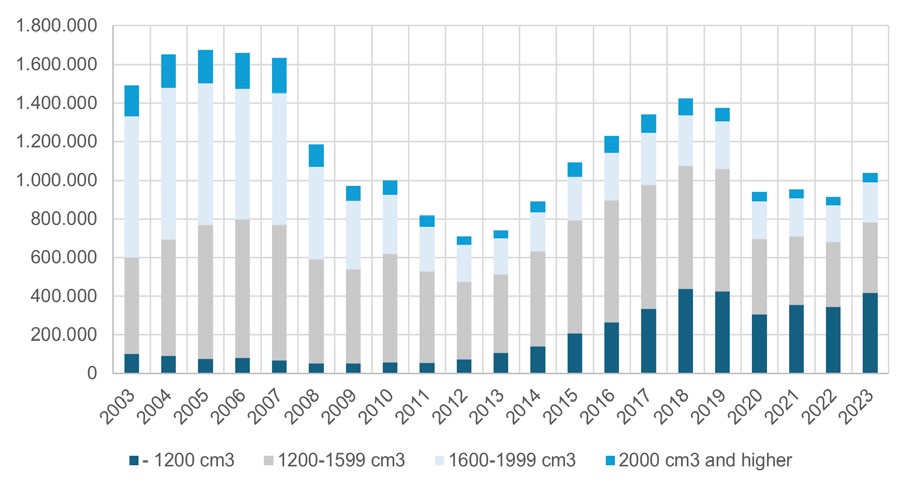
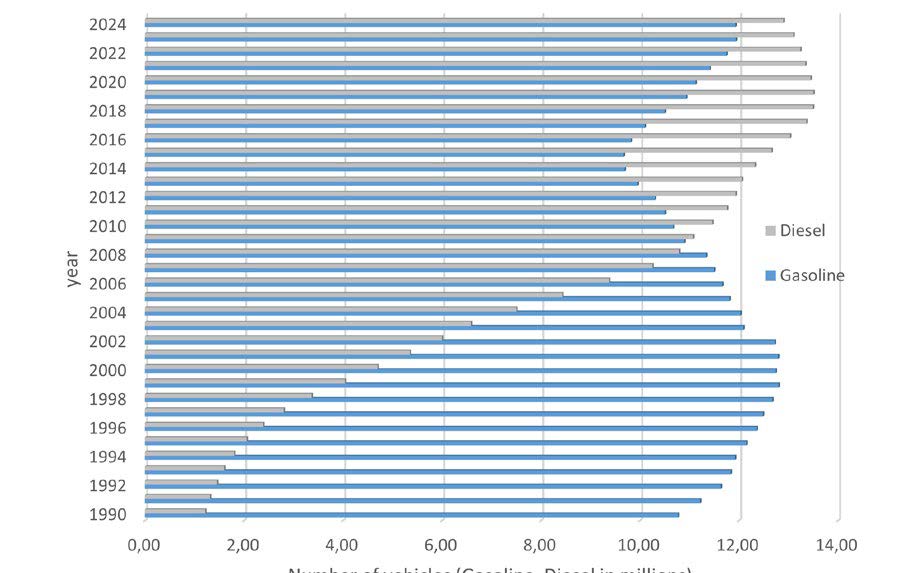
Electrification will likely be the main key player in future mobility in the global north, but the global trend is for combustion vehicles to continue dominating the market due to the intrinsic dif!culty for emerging economies to adopt a completely different charging infrastructure. Therefore, the development of high-efficiency engines will be a key driver for reducing global CO2 emissions in the transport sector. This trend has also been observed in the Spanish fleet, where a general reduction in engine size has been accompanied by a significant decrease in average CO2 emissions (Fig. 1). The reduction in fuel consumption is steeper than it may initially seem, because the decrease in emissions has been achieved with an increase in average vehicle weight and power (Hu et al., 2020). The car manufacturing sector has great influence in a country gross domestic product (GDP), thereby regulation regarding emission and transport limitation should carefully evaluate the real environmental benefits gained. For this reason, lacks any sense the intended Spanish future regulation banning publicity of cars having a diesel or a gasoline engine which do not count with any type of hybridization (Ministerio de Derechos Sociales, Consumo y Agenda 2030, n.d.) when the urgent aim to achieve is reducing fuel consumption and avoiding high levels of pollutant emissions.
Another striking issue is the population’s commitment to the environment. A Eurobarometer survey conducted in 2010 indicated that consumers intended to purchase smaller vehicles to mitigate CO2 emissions, but this intention was not realized, as sales of sport utility vehicles (SUVs) actually increased from 8.5% in 2009 to approximately 40% in 2020 (Vilchez et al., 2023). A similar behaviour may be observed in the population’s intention to acquire an electric vehicle and the realization of the purchase. Intention may not be an adequate predictor of willingness to pay, because consumers may consider other issues to have more impact in their !nal decision when the purchasing moment finally arrives, thus making clear the inconsistency of what people say they will do and what they actually do (Cabeza-Ramírez et al., 2025; Bishop and Barber., 2014). Interestingly, the fuel consumption of SUVs is often comparable to, or even lower than, that of van-type family vehicles. As a result, car manufacturers are meeting consumer demand by offering vehicles that satisfy both versatile mobility requirements and personal aspirations. This approach appeals to customers’ preferences for vehicles that align with their lifestyle choices, rather than simply providing utilitarian family transportation.
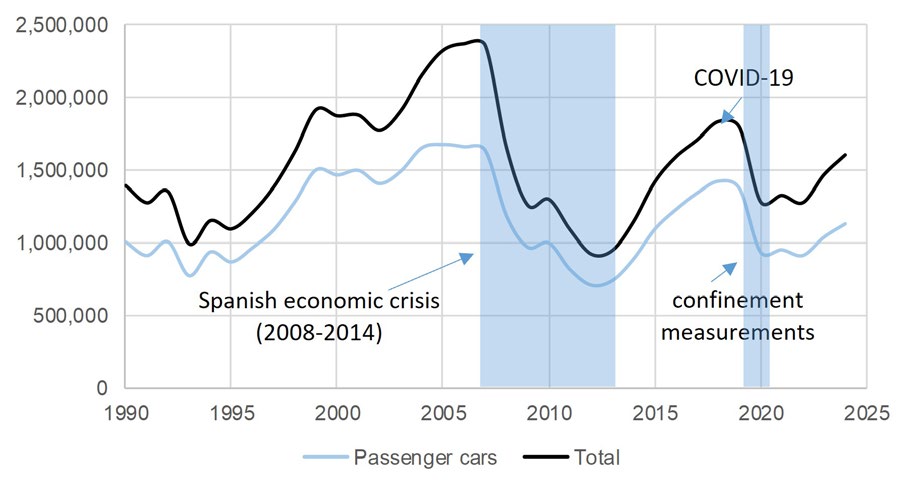
One factor that should not be disregarded and has a significant influence on emissions is the evolution of the economy and the purchasing capacity of citizens for new vehicles. This issue is relevant since it affects the mean age of the passenger car fleet, with an increase in this value having an adverse impact on fuel consumption and pollutant emissions. The Spanish crisis period and the confinement measures associated with the pandemic are shown in figure 2, coincident with a significant decrease in the number of new vehicle transactions.
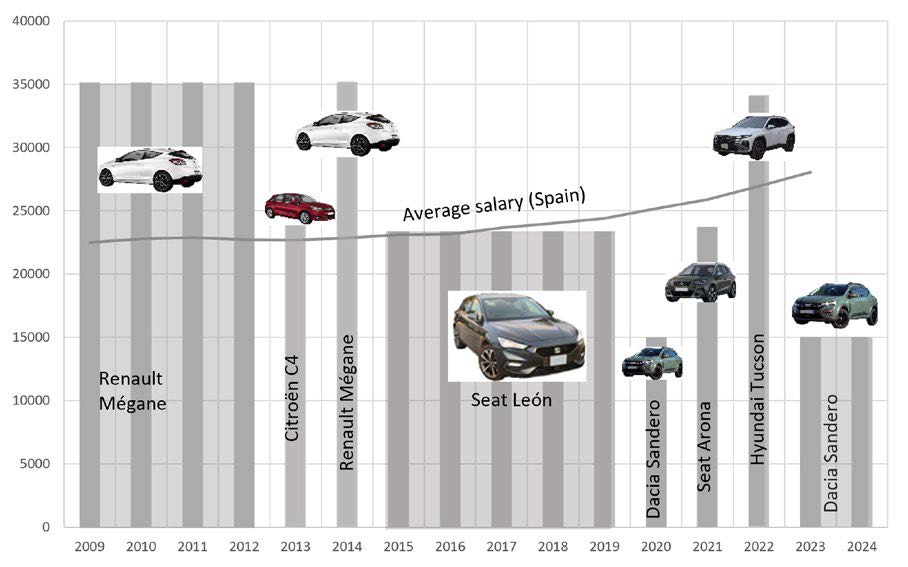
A noticeable increase in vehicle transactions occurred around 2012; however, pandemic-related restrictions later caused significant market disruption. From 2020 to 2024, vehicle registrations have once again trended upward, yet the most sold models during this period tend to be lower-priced vehicles. This trend is illustrated in figure 3, which presents both the average salary in Spain and the price (as of 2024) of the top-selling vehicle for each year from 2009 to 2024. Despite a nominal rise in average salaries, the data clearly suggest that families’ purchasing power has declined, influencing the types of vehicles being bought.
3. BIOFUELS AS ALTERNATIVES FOR REDUCING CO2 EMISSIONS FROM FOSSIL FUELS
Car manufacturers have made significant efforts and advances in developing new propulsion systems aimed at reducing fuel consumption. Probably one of the efforts having less awareness by the population is the difficulties associated with the loss of profitability when starting a new production plant for EVs. The transition towards an electrified vehicle fleet implies that the car manufacturer must dismantle a profitable combustion assembly line to start up an expensive EV assembly plant, which is full of uncertainties and initially operates at minimum capacity (Hancké & Mathei, 2024). Alternatives currently competing with electric vehicles include those capable of using dual fuels and hybridization, which incorporate batteries.
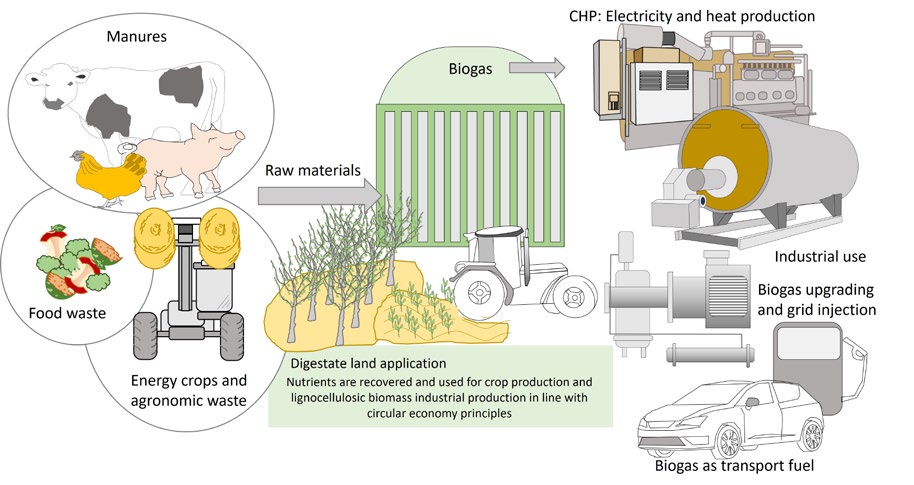
The development of systems based on the use of gaseous fuels such as natural gas, liquid petroleum gases and hydrogen aids in reducing fuel consumption. The use of compressed natural gas has the advantage that shares compatibility with biogas, which is derived from the anaerobic digestion of organics such as waste streams and fermentable biomass. Some examples of the technology are the Skoda Octavia model and the Skoda Scala model (Skoda, n.d.; Skoda-storyboard, n.d.), with CO2 emissions being about 25% lower when running on natural gas. The additional advantage is the lower price of fuelling. Based on the information provided by the Ministerio para la Transición Ecológica y el Reto Demográfico, the price of fuelling with natural gas is about 4.53 € per 100 km; in contrast, this value goes up to 7.35 € for fast electric charging, and up to 9.26 € when using gasoline (Ministerio para la Transición Ecológica, n.d.).
Other fuels frequently used as alternatives in internal combustion engines include liquid petroleum gases (LPG). The acceptance of this option has been much wider than that of using compressed natural gas due to the high availability of recharging points and the ease of modification when the vehicle does not incorporate this feature directly from manufacturing. Dacia offers several models with this characteristic (Dacia, n.d.), reducing CO2 emissions per kilometer by approximately 12-15%. H2 is another alternative available in the market, and even though the price of vehicles has decreased in recent years, with models in the range of 75,000 and 82,000 €, such as the Toyota Mirai (Toyota.es, n.d.), the availability of recharging points is limited. However, this issue has not stopped other car manufacturers from designing and developing H2 -based models. Hyundai presented its Nexo model in 2023, which is based on a fuel cell and a powertrain using electric motors, with a price starting from approximately 73,500 € (Hyundai, n.d.). Honda is the third car manufacturer that incorporates this technology in its stock, initially with the Honda Clarity fuel cell and currently with the Honda CR-V e:FCEV, which is a plug-in vehicle (Automobiles Honda, n.d.). Despite the variety of options, the number of vehicles with hydrogen technology purchased in Spain increased to 21 units in 2023 and 62 units in 2024, with only 7 units of Hyundai Nexo purchased in 2024 (ANFAC, 2024a). The technology appears promising, but the amount of energy and water required to produce hydrogen through water electrolysis seems excessive for running a fleet based on this technology. Mansuri et al. (2020) estimated the need for a 4 MW capacity solar photovoltaic plant to serve a 100 vehicle fleet (50% being cars and the remaining being 2-wheel motorcycles) and a demand for water of 3.3 m3 water/day. The high costs of installing H2 refuelling stations, along with the cost of producing hydrogen from electrolysers, restrict the deployment of the technology (installation costs for PEM electrolysers are about 1,812 $/kW updated to 2023) (Badgett et al., 2024).
Electrification will likely be the main key player in future mobility in the global north, but the global trend is for combustion vehicles to continue dominating the market due to the intrinsic difficulty for emerging economies to adopt a completely different charging infrastructure. Therefore, the development of high-efficiency engines will be a key driver for reducing global CO2 emissions in the transport sector. This trend has also been observed in the Spanish fleet, where a general reduction in engine size has been accompanied by a significant decrease in average CO2 emissions (Fig. 1). The reduction in fuel consumption is steeper than it may initially seem, because the decrease in emissions has been achieved with an increase in average vehicle weight and power (Hu et al., 2020). The car manufacturing sector has great influence in a country gross domestic product (GDP), thereby regulation regarding emission and transport limitation should carefully evaluate the real environmental benefits gained. For this reason, lacks any sense the intended Spanish future regulation banning publicity of cars having a diesel or a gasoline engine which do not count with any type of hybridization (Ministerio de Derechos Sociales, Consumo y Agenda 2030, n.d.) when the urgent aim to achieve is reducing fuel consumption and avoiding high levels of pollutant emissions.
Another striking issue is the population’s commitment to the environment. A Eurobarometer survey conducted in 2010 indicated that consumers intended to purchase smaller vehicles to mitigate CO2 emissions, but this intention was not realized, as sales of sport utility vehicles (SUVs) actually increased from 8.5% in 2009 to approximately 40% in 2020 (Vilchez et al., 2023). A similar behaviour may be observed in the population’s intention to acquire an electric vehicle and the realization of the purchase. Intention may not be an adequate predictor of willingness to pay, because consumers may consider other issues to have more impact in their final decision when the purchasing moment finally arrives, thus making clear the inconsistency of what people say they will do and what they actually do (Cabeza-Ramírez et al., 2025; Bishop and Barber., 2014). Interestingly, the fuel consumption of SUVs is often comparable to, or even lower than, that of van-type family vehicles. As a result, car manufacturers are meeting consumer demand by offering vehicles that satisfy both versatile mobility requirements and personal aspirations. This approach appeals to customers’ preferences for vehicles that align with their lifestyle choices, rather than simply providing utilitarian family transportation.
One factor that should not be disregarded and has a significant influence on emissions is the evolution of the economy and the purchasing capacity of citizens for new vehicles. This issue is relevant since it affects the mean age of the passenger car fleet, with an increase in this value having an adverse impact on fuel consumption and pollutant emissions. The Spanish crisis period and the confinement measures associated with the pandemic are shown in figure 2, coincident with a significant decrease in the number of new vehicle transactions.
A noticeable increase in vehicle transactions occurred around 2012; however, pandemic-related restrictions later caused significant market disruption. From 2020 to 2024, vehicle registrations have once again trended upward, yet the most sold models during this period tend to be lower-priced vehicles. This trend is illustrated in figure 3, which presents both the average salary in Spain and the price (as of 2024) of the top-selling vehicle for each year from 2009 to 2024. Despite a nominal rise in average salaries, the data clearly suggest that families’ purchasing power has declined, influencing the types of vehicles being bought.
4. HYBRID VEHICLES ARE THE GLOBAL KEY PLAYERS IN EFFICIENT TRANSPORT SYSTEMS
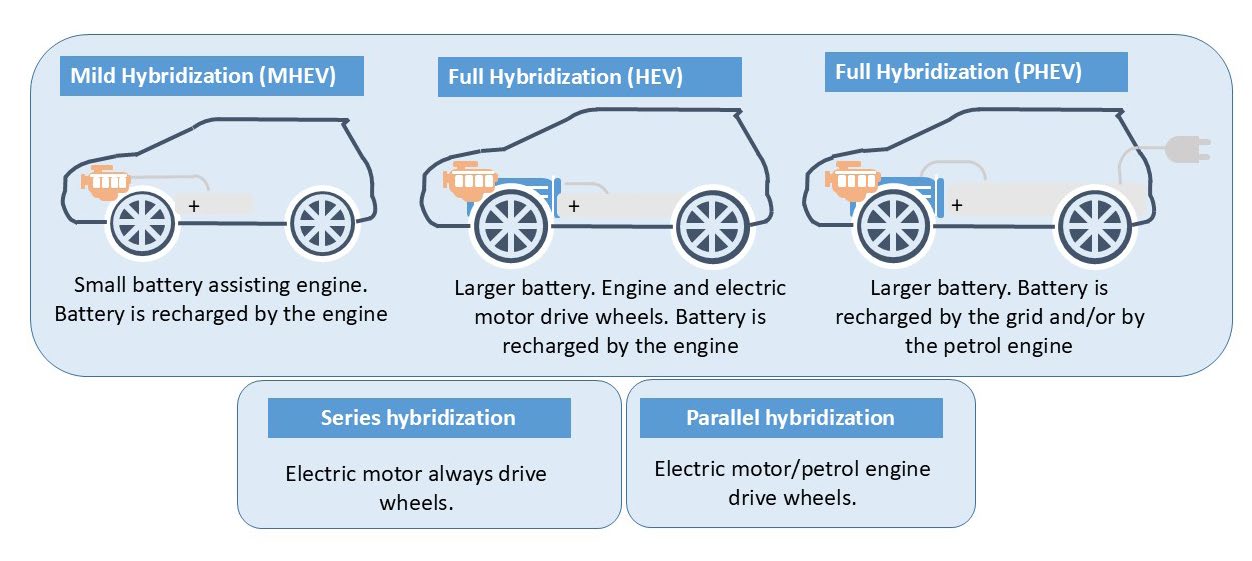
Currently, the market offers different types of hybridizations ranging from the use of different fuels, that is, LPG or CNG, and conventional fuels, and those commonly recognized as battery hybrid vehicles where the energy stored in the battery can aid in vehicle propulsion at some specific moments or can provide full propulsion depending on the configuration of the system and size of the battery. These vehicles are categorized into mild hybrid vehicles where a small battery of usually 48 V aids (or even smaller, as that of Nissan Qashqai (12 V)) in reducing fuel consumption thanks to regenerative braking. Full hybridization, or simply hybrid electric vehicles, incorporates a larger battery size, allowing the vehicle to run on electric power alone, combustion, or in parallel propulsion using both engines. In this case, the combustion engine can recharge the battery in addition to regenerative braking. Plug-in hybrid vehicles allow for charging the battery directly from the electric grid (Fig. 6). The technology has evolved, so Honda currently offers the CR-V e: PHEV model with an electric autonomy of 80 km. However, the combustion engine can recharge the battery while driving, allowing the vehicle to run in electric mode after the “charge mode” is activated (Honda.es, 2024).
Hybridization configuration can be classified as series or parallel hybridization. In the first case, the electric motor drives the wheel, while the combustion engine is used for continuously recharging the battery; therefore, the engine power is provided by the electric motor. In the case of parallel hybridization both engines collaborate in vehicle propulsion. Therefore, the power of the vehicle is determined by an approximate summation of both engines, but the final output depends on different factors such as the point of maximum power of individual engines which is located at different RPM and smoothness and efficiency while driving which needs to be prioritized explaining the lower output of the parallel configuration, which does not come from the simple summation of engines individual power (Toyota, n.d.).
One significant advantage of hybrid vehicles is the feature of regenerative braking, which allows for a substantial reduction in particulate matter (PM 10 and PM 2.5 particles) during braking compared to conventional combustion vehicles. As a result, these vehicles offer threefold environmental benefits: they emit less CO2 thanks to lower fuel consumption, generate fewer pollutants during braking, and use smaller batteries than fully electric vehicles —thus reducing the demand for raw material extraction. Hybrid and mild hybrid vehicles have a significant impact on lowering global CO2 emissions. These vehicles are fully compatible with the existing transport infrastructure, enabling easy deployment in both developed and developing countries. Given these advantages, it is worth considering whether directing public funding toward incentives for hybrid vehicle adoption might be a more effective strategy for reducing global greenhouse gas emissions than current approaches.
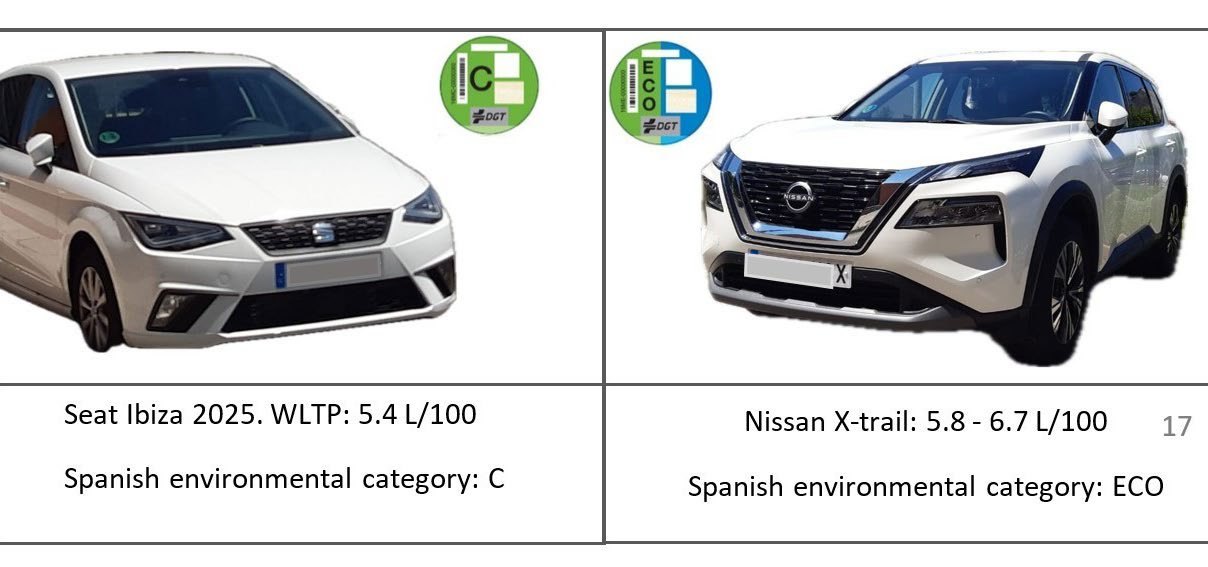
Adding any type of battery to combustion vehicles increases manufacturing costs which is translated as an increase in the selling price of the vehicle. Therefore, causing a disincentive in the acquisition of a new vehicle and adversely affecting the fleet average age of any country. The aim of reducing fuel consumption, should consider not only the factor of electric hybridization but also the total fuel consumption of a vehicle, given that Euro 6d emission regulation is complied, there is no reason for assigning a lower environmental category to a vehicle adapted to Euro 6d regulation with a lower fuel consumption, that to another one with higher fuel consumption but having a battery in this case (Fig. 7). None should be penalized and both should be suitable candidates for receiving positive environmental categorizations.
5. CONCLUSIONS
This document highlights the multifaceted challenges and opportunities in decarbonizing the transport sector, emphasizing that a successful transition requires a combination of advanced technologies, pragmatic policy measures, and social acceptance. While regulatory frameworks such as the Fit for 55 package and ambitious emissions targets steer progress, their implementation must account for economic realities, technological maturity, and the risk of unintended consequences, such as the aging of vehicle fleets.
No single solution —whether electrification, alternative fuels, or hybridization— can independently achieve the required reductions in greenhouse gas emissions. Instead, progress will depend on a balanced approach that leverages the strengths of each technology. Hybrid vehicles, with their compatibility with existing infrastructure and significant reductions in emissions, emerge as a particularly effective bridge technology, especially for regions where full electrification is not immediately feasible.
Biofuels, including biogas, bioethanol, and biodiesel, offer viable alternatives for reducing fossil fuel dependence, especially when produced from waste streams. However, their wider adoption is constrained by infrastructure, cost, and social acceptance. Socioeconomic factors —such as purchasing power, consumer preferences — and the average age of vehicle fleets should be considered in policy design. Incentivizing the adoption of efficient vehicles, regardless of their propulsion system, and ensuring that environmental classifications accurately reflect their true emissions performance will be critical to achieving meaningful reductions. Decarbonizing transport demands coordinated action among policymakers, manufacturers, and consumers. A flexible, multi-technology strategy —supported by sound regulation, targeted incentives, and ongoing innovation— will be essential to advance toward climate neutrality while maintaining mobility, economic stability, and public acceptance.
REFERENCES
Abdelfatah-Aldayyat E, Gómez X (2025). Hydrothermal Treatment of Digestates: Challenges and Perspectives. Environments 12: 347. https://doi.org/10.3390/ environments12100347.
Abdelfatah-Aldayyat E, GonzálezRojo S, Gómez X (2024). Reviewing Digestate Thermal Valorization: Focusing on the Energy Demand and the Treatment of Process Water. Environments 11: 239. https://doi.org/10.3390/ environments11110239.
ANFAC, 2024a. Informe anual 2024. Available on: https://anfac. com/publicaciones/informeanual-2024/ (accessed on 30th August 2025).
ANFAC, 2024b. la movilidad del futuro. Available on: https:// anfac.com/los-turismos-tirandel-mercado-electrificado-en2024-que-cierra-con-125-185- vehiculos-vendidos/ (accessed on 30th August 2025).
Appels L, Van Assche A, Willems K, Degrève J, Van Impe J, Dewil R (2011). Peracetic acid oxidation as an alternative pre-treatment for the anaerobic digestion of waste activated sludge. Bioresource Technology 102(5): 4124- 4130. https://doi.org/10.1016/j. biortech.2010.12.070.
Automobiles Honda (n.d.) CR-V e-FCEV. Available on: https:// es.automobiles.honda.com/cr-vfcev (accessed on 4th September 2025).
Badgett A, Brauch J, Thatte A, Rubin R, Skangos C, Wang X, Ahluwalia R, Pivovar B, Ruth M (2024). Updated manufactured cost analysis for proton exchange membrane water electrolyzers (No. NREL/TP-6A20-87625). National Renewable Energy Laboratory (NREL), Golden, CO (United States). https:// doi:10.2172/231114.
Barasa-Kabeyi MJ, Akpan J, Olanrewaju OA (2025). Electricity generation and multipurpose applications from biogas and biomethane. International Journal of Power Electronics and Drive Systems 16(2): 1325-1340. https://doi.org/10.11591/ijpeds. v16.i2.pp1325-1340.
Bertasini D, Battista F, Rizzioli F, Frison N, Bolzonella D (2023). Decarbonization of the European natural gas grid using hydrogen and methane biologically produced from organic waste: A critical overview. Renewable Energy 206: 386-396. https://doi. org/10.1016/j.renene.2023.02.029.
Bishop MM, Barber NA (2014). Putting your money where your mouth is: the value of low purchase intention consumers to product pricing. Journal of Product Innovation Management 31(5): 908-923. https://doi.org/10.1111/ jpim.12131.
Borregaard (n.d.). Lignin & Lignosulfonates. Available on: https://www.borregaard.com/product-areas/ lignin?utm_term=lignin%20biopolymer&utm_campaig – n=Product+A rea+%7C+Lignin +Biopolymers+%7C+Global&utm_source=adwords&utm_medium=- ppc&hsa_acc=3642184401&hsa_cam=13555587785&h – sa_grp=126240300920&h – sa_ad=655182154449&h – sa_src=g&hsa_tg – t=kwd-1371649915331&h – sa_kw=lignin%20 biopolymer&hsa_mt=p&h – sa_net=adwords&hsa_ver=3&- gad_source=1&gclid=Cj0KCQjwhMq-BhCFARIsAGvo0Kdjk2MwX9COmiEgAcjot4SX2O6wWkGm2f N1g8PxEBAIyluykrEez8IaAlfhEALw_wcB (accessed on 4th September 2025).
Boulanger AG, Chu AC, Maxx S, Waltz DL (2011). Vehicle electri- !cation: Status and issues. Proceedings of the IEEE 99(6): 1116- 1138. https://doi.org/10.1109/ JPROC.2011.2112750.
Bourdin S, Chassy A (2023). Are citizens ready to make an environmental effort? A study of the social acceptability of biogas in France. Environmental Management 71(6): 1228-1239. https:// doi.org/10.1007/s00267-022- 01779-5.
Bumharter C, Bolonio D, Amez I, Martínez MJG, Ortega MF (2023). New opportunities for the European Biogas industry: A review on current installation development, production potentials and yield improvements for manure and agricultural waste mixtures. Journal of Cleaner Production 388: 135867. https://doi.org/10.1016/j.jclepro.2023.135867.
Cabeza-Ramírez LJ, Rosales-Tristancho A, Sánchez-Cañizares SM, Palacios-Florencio B (2025). Rational and normative determinants in electric vehicle adoption: Willingness to pay and moderating variables. Technology in Society 81: 102842. https://doi.org/10.1016/j.techsoc.2025.102842.
Council of the European Union (n.d.). Fit for 55. Available on: https://www.consilium.europa. eu/en/policies/fit-for-55/#:~:- text=for%2055%20packa – ge%3F-,What%20is%20the%20 Fit%20for%2055%20package%- 3F,just%20and%20socially%20 fair%20transition (accessed on 20th March 2025).
Dacia (n.d.). Coches GLP Dacia Eco-G: muévete libre por tu ciudad. Available on: https://www. dacia.es/dacia-glp.html (accessed on 4th September 2025).
DGT (2024). Available on: https:// www.dgt.es/menusecundario/ dgt-en-cifras/dgt-en-cifras-resultados/dgt-en-cifras-detalle/ Parque-de-vehiculos-Series-historicas-2024/ (accessed on 4th September 2025).
Ellacuriaga M, García-Cascallana J, Gómez X (2021). Biogas Production from Organic Wastes: Integrating Concepts of Circular Economy. Fuels 2: 144- 167. https://doi.org/10.3390/ fuels2020009.
Estrada IB, Gomez E, Aller A, Moran A (2006). Microbial monitoring of the in»uence of the stabilization degree of sludge when applied to soil. Bioresource Technology 97(11): 1308-1315. https://doi.org/10.1016/j.biortech.2005.05.024.
Erbach G, Jensen L (2024). BRIEFING Towards climate neutrality: Fit for 55 package. Available on: https://www.europarl. europa.eu/RegData/etudes/ BRIE/2022/733513/EPRS_ BRI(2022)733513_EN.pdf (accessed on 20th March 2025).
European Alternative Fuels Observatory. Portugal: Record EV Sales in 2024. Available on: https://alternative-fuels-observatory.ec.europa.eu/general-information/news/ portugal-record-ev-sales-2024 (accessed on 30th August 2025). European commission (n.d.). CO emission performance standards for cars and vans. Available on: https://climate. ec.europa.eu/eu-action/transport/road-transport-redu – cing-CO2-emissions-vehicles/ co2-emission-performance-standards-cars-and-vans_en#:~:text=registered%20in%202017.-,Penalties%20for%20excess%20 emissions,g%2Fkm%20of%20 target%20exceedance (Accessed on 5th November 2024).
European Parliament & Council of the European Union (2019). Regulation (EU) 2019/631 of the European Parliament and of the Council of 17 April 2019 setting CO2 emission performance standards for new passenger cars and for new light commercial vehicles, and repealing Regulations (EC) No 443/2009 and (EU) No 510/2011 (recast) (Text with EEA relevance). Available on: https://eur-lex.europa.eu/eli/ reg/2019/631/oj/eng (accessed on 20th September 2025).
Fitzgerald J (2024). Average Age of Vehicles in U.S. Continues to Rise. available on: https:// www.caranddriver.com/news/ a60882953/average-age-us-carstrucks-suvs-rises/ (accessed on 30th August 2025).
France24 (2025). EU proposes emission rule delay to spare carmakers from fines. https://www.france24. com/en/live-news/20250303-euchief-offers-carmakers-more-time-on-emission-rules-to-avoid- fines (accessed on 30th April 2025).
González R, García-Cascallana J, Gómez X (2023). Energetic valorization of biogas. A comparison between centralized and decentralized approach. Renewable Energy 215: 119013. https://doi.org/10.1016/j.renene.2023.119013.
González R, Gómez X (2024). Ammonia Can Be Currently Considered One of the Best Green Energy Allies. Sustainable Chemistry 5: 163-195. https://doi. org/10.3390/suschem5020012.
GranBio (n.d.). Enabling Net Zero. Available on: https://www.granbio.com.br/en/our-technology/ bio»ex/ (accessed on 4th September 2025).
Hancké B, Mathei L (2024). Varieties of just transitions in the European car industry. Contemporary Social Science 19:(1-19) 135-153. https://doi.org/10.1080/21582041 .2024.2317389.
Honda.es (n.d). Available on: https://www.honda.es/cars/new/ cr-v-hybrid-suv/overview.html?gad_source=1&gad_campaignid=15238954013& – gbraid=0A A A A ADpuT – 8QXFoiDaDRTMgO – qMS793od0Q&gclid=Cj0KCQjw953DBhCyARIsANhIZoYtEVw9B1_kMd-iTBAg5LdzWFt1U96BxbxgXJRya_KiRH – FWapzrfeMaAvz4EALw_wcB&- gclsrc=aw.ds (accessed on 14th September 2025).
Hu Z, Zhang J, Sjöberg M, Zeng W (2020). The use of partial fuel strati!cation to enable stable ultra-lean de»agration-based Spark-Ignition engine operation with controlled end-gas autoignition of gasoline and E85. International Journal of Engine Research 21(9): 1678-1695. https://doi. org/10.1177/1468087419889702.
Hyundai (n.d.). Nexo. Available on: https://www.hyundai.com/es/es/ modelos/nexo.html (accessed on 4th September 2025). I
EA Bioenergy. 2024. A perspective on the state of the biogas industry in 12 member countries of IEA Bioenergy Task 37. Available on: https://www.ieabioenergy.com/ wp-content/uploads/2024/10/ IEA_Bioenergy_T37_Countr yReportSummar y_ 2024.pdf (accessed on 4th September 2025).
Inayat A, Jamil F, Rocha-Meneses L, Abdellatief TM (2024). Introductory Chapter: Synthesis Gas Production–History and Current Scenario. In Research Advances in Syngas. IntechOpen. https://doi.org/10.5772/intechopen.1004367.
Jin D, Cho K, Myun CL, Lim Y, Lee J, Park S (2017). The impact of various ethanol-gasoline blends on particulates and unregulated gaseous emissions characteristics from a spark ignition direct injection (SIDI) passenger vehicle. Fuel 209: 702-712. https://doi.org/10.1016/j.fuel.2017.08.063.
Jong W, van der Linde V (2022). Clean diesel and dirty scandal: The echo of Volkswagen’s dieselgate in an intra-industry setting. Public Relations Review 48(1): 102146. https://doi.org/10.1016/j. pubrev.2022.102146.
Junquera B, Moreno B, Álvarez R (2016). Analyzing consumer attitudes towards electric vehicle purchasing intentions in Spain: Technological limitations and vehicle con!dence. Technological Forecasting and Social Change 109: 6-14. https://doi.org/10.1016/j.techfore.2016.05.006.
Kable G (2023). GAC and Toyota develop ammonia engine for 90% CO2 reduction. Available on: https://www.autocar.co.uk/ car-news/new-cars/gac-and-toyota-develop-ammonia-engine-90-co2-reduction (accessed on 14th September 2025).
Kia (n.d). Con!gurador KIA. Available on: https://www.kia.com/ es/quiero-un-kia/configurador. H W-W5-*/#/ Versi%C3%B3n (Accessed on 4th September 2025).
Mansuri MF, Saxena BK, Mishra S (2020). Shifting from Fossil Fuel Vehicles to H2 based Fuel Cell Electric Vehicles: Case Study of a Smart City. In 2020 International Conference on Advances in Computing, Communication & Materials (ICACCM) (pp. 316-321). IEEE. doi: 10.1109/ ICACCM50413.2020.9213043.
Mercedes-benz.es (n.d.). GLC. Available on: https://www.mercedes-benz.es/passengercars/ models/suv/glc/overview.html?srsltid=AfmBOooD10D1AfsCehYEfSbFMih1HhIUjGlEdpOFErQ3f5ipOglza0vw (accessed on 4th September 2025).
Ministerio de Derechos Sociales, Consumo y Agenda 2030. La Ley de Consumo Sostenible prohíbe la publicidad de los vuelos cortos, de los combustibles fósiles y de los vehículos más contaminantes. (2025). Available on: https://www. dsca.gob.es/es/comunicacion/ notas-prensa/ley-consumo-sostenible-prohibe-publicidad-vuelos-cortos-combustibles (Accessed on 4th September 2025).
Ministerio para la Transición Ecológica. Información comparativa sobre el coste de los combustibles de automoción en #/100km. Available on: https://eurospor100km.energia.gob.es/Paginas/ coste%E2%82%AC100km.aspx#- consulta-marca (accessed on 4th September 2025).
Moeve, Cepsa (n.d.). Available on: https://www.moeve.es/es/empresa/biocombustibles/hvo (accessed on 4th September 2025).
Morán I, González R, Cascallana JG, Gómez X (2024). The hard route towards vehicle electri!cation and decarbonization. Técnica Industrial 338: 58-69.
Neste (n.d.). Available on: https:// www.neste.com/ (accessed on 4th September 2025).
Nikola. Available on: https://www. nikolamotor.com/tre-fcev (accessed on 14th September 2025).
Nordex Electrolyzers. A project is launched to boost the decarbonization of industrial processes through electrolyzers that generate green hydrogen. Available on: https://www.nordex-online.com/nordex-electrolyzers/2024/10/a-pro – ject-is-launched-to-boost-the-decarbonization-of-indus – trial-processes-through-electrolyzers-that-generate-green- -hydrogen/ (accessed on 14th September 2025).
Schenuit F, Boettcher M, Geden O (2023). » Carbon Management»: Opportunities and risks for ambitious climate policy. Available on: https://www.swp-berlin.org/10.18449/2023C29/ (accessed on 20th September 2025).
Skoda. Tecnología del Skoda Scala G-Tec. Available on: https:// www.skoda.es/modelos/scala/ scala-gtec/tecnologia-gtec (accessed on 4th September 2025).
Skoda-Storyboard. Eco-friendly and cost-effective alternative: the new $KODA OCTAVIA G-TEC (2020). Available on: https:// www.skoda-storyboard.com/en/ press-releases/eco-friendly-andcost-effective-alternative-thenew-skoda-octavia-g-tec/ (accessed on 4th September 2025).
Statista (2024). Share of fossil fuels in primary energy consumption worldwide from 1965 to 2024. Available on: https://www.statista.com/statistics/1302762/ fossil-fuel-share-in-energy-consumption-worldwide/ (accessed on 20th September 2025).
Pamidimukkala A, Kermanshachi S, Rosenberger JM, Hladik G (2024). Barriers and motivators to the adoption of electric vehicles: A global review. Green Energy and Intelligent Transportation 3(2): 100153. https://doi. org/10.1016/j.geits.2024.100153.
Panuccio MR, Romeo F, Mallamaci C, Muscolo A (2021). Digestate application on two different soils: agricultural bene!t and risk. Waste and Biomass Valorization 12: 4341-4353. https://doi. org/10.1007/s12649-020-01318-5.
Raizen (n.d.). Available on: https:// www.raizen.com.br/en/our-business/renewables#ethanol (accessed on 4th September 2025).
Repsol (n.d.). Available on: https:// www.repsol.com/es (accessed on 4th September 2025).
Saad MB, Gonçalves AR (2024). Industrial pretreatment of lignocellulosic biomass: A review of the early and recent efforts to scale-up pretreatment systems and the current challenges. Biomass and Bioenergy 190: 107426. https://doi.org/10.1016/j.biombioe.2024.107426.
Sevillano CA, Pesantes AA, Peña Carpio E, Martínez EJ, Gómez X (2021). Anaerobic digestion for producing renewable energy—the evolution of this technology in a new uncertain scenario. Entropy 23(2): 145. https://doi.org/10.3390/e23020145.
Sustainable Bus, editorial staff (2025). Fuel cell bus projects in the spotlight: «eets, manufacturers, trends. Available on: https://www. sustainable-bus.com/fuel-cell-bus/ fuel-cell-bus-hydrogen/ (accessed on 14th September 2025).
Technip Energies. Available on: https://www.ten.com/en/markets/sustainable-aviation-fuels-saf (accessed on 14th September 2025).
Topsoe. Available on: https://www. topsoe.com/processes/syngas (accessed on 14th September 2025).
Toyota (n.d.). 2025 RAV4 Plug-in Hybrid Full Specs. Available on: https://www.toyota.com/rav4pluginhybrid/features/mpg_other_price/4544/4550 (accessed on 14th September 2025). Toyota.es (n.d.).
Toyota Mirai. Available on: https://www.toyota.es/coches/mirai (accessed on 4th September 2025).
US Deapartment of Energy, Of!- ce of Critical Minerals and Energy Innovation (2024). Global ethanol production by country or region. Available on: https://afdc.energy. gov/data/10331 (accessed on 4th September 2025).
Vilchez JJG, Pasqualino R, Hernandez Y (2023). The new electric SUV market under battery supply constraints: Might they increase CO emissions? Journal of Cleaner Production 383: 135294. https://doi.org/10.1016/j.jclepro.2022.135294.
Yang A, Liu C, Yang D, Lu C (2023). Electric vehicle adoption in a mature market: A case study of Norway. Journal of Transport Geography 106: 103489. https://doi.org/10.1016/j. jtrangeo.2022.103489. Yang J, Roth P, Durbin TD, Shafer MM, Hemming J, Antkiewicz, DS, Asa-Awuku A, Karavalakis G (2019).
Emissions from a «ex fuel GDI vehicle operating on ethanol fuels show marked contrasts in chemical, physical and toxicological characteristics as a function of ethanol content. Science of The Total Environment 683: 749-761. https://doi. org/10.1016/j.scitotenv.2019.05.279.
