
Design of a User-Adaptive Electric Violin: Ergonomics, Technology, and Education
Diseño de un violín eléctrico adaptado: ergonomía, tecnología y educación musical

Isabel Prieto Rivero (1) y María Antonia Simón Rodríguez (1)
Resumen
Este artículo presenta el desarrollo de un violín eléctrico con funciones didácticas y mejoras ergonómicas personalizadas dirigido a la enseñanza musical. El diseño combina tecnologías como escaneo 3D, impresión aditiva, CAD, circuitos amplificadores y Arduino para crear un instrumento adaptado al músico, con retroalimentación visual en tiempo real. Se detallan las etapas de diseño, fabricación e integración electrónica, así como sus limitaciones técnicas y resultados obtenidos.
Palabras clave: violín eléctrico, diseño ergonómico, Arduino, escaneo 3D, retroalimentación en tiempo real y educación musical.
Abstract
This article presents the development of an electric violin with didactic functions and personalized ergonomic improvements aimed at music education. The design combines technologies such as 3D scanning, additive manufacturing, CAD, amplifier circuits, and Arduino to create an instrument tailored to the player, with real-time visual feedback. The stages of design, manufacturing, and electronic integration are detailed, along with technical limitations and obtained results.
Keywords: electric violin, ergonomic design, Arduino, 3D scanning, real-time feedback, and music education.
Recibido/received: 05/11/2026 Aceptado/accepted: 12/02/2026
(1) Universidad Francisco de Vitoria, Pozuelo de Alarcón, Madrid, España.
Corresponding authors: Isabel Prieto Rivero, e-mail: is*************@***il.com; María Antonia Simón Rodríguez, e-mail: ma****************@*fv.es.
1. INTRODUCTION
This article presents the results of a research project that explores and materializes the intersection between traditional violin craftsmanship and the possibilities offered by modern technology. Focused on improving a classical instrument, the work seeks to optimize its ergonomics and integrate didactic functionalities that enrich both the performer’s experience and the learning process.
For decades, violinists have faced ergonomic difficulties stemming from uncomfortable postures and forced grips that can lead to fatigue or longterm injuries. In the initial stages of learning, these physical limitations add to the technical complexity of the instrument, often resulting in demotivation or premature abandonment. This situation has prompted the search for solutions that respond both to the musician’s physical needs and to the cognitive challenges inherent to early training stages.
A review of the literature and of the existing products revealed that, although there have been multiple attempts to address these issues, most offer only partial solutions. Among them there are commercial accessories designed to improve bow grip or help maintain correct left-hand wrist position. However, most are generic solutions, not adapted to the user’s anatomy, and their corrective effect usually disappears once they are removed. Moreover, some studies have emphasized that these aids tend to overlook key factors such as finger tension or overall body posture, decisive elements for fluid and healthy performance (Galamian, 1962; Allende Aguilera, 2016).
In response to these limitations, technologies such as 3D scanning have been explored, enabling the capture of the performer’s hand morphology and the design of customized ergonomic accessories. This approach has proven effective in reducing muscle tension and improving technical accuracy, particularly among beginner students (Betancur Rodríguez, 2011; Pérez-Hernández et al., 2022).
At the same time, progress has also been made in integrating digital technologies into music education. Some mobile applications, such as Tonestro or Trala, use the device’s microphone to guide the user, but they imply constant dependence on the phone, which can alter posture and distract the student. Recent studies have proposed more immersive approaches, such as visual feedback systems integrated directly into the instrument itself, especially in the context of piano or guitar (Borja & Camargo, 2024). In this regard, Arduino technology emerges as an accessible and versatile tool for providing real-time information on tuning and performance, thus facilitating more autonomous and effective learning (Tejada Giménez, 2004).
The present article proposes a multidisciplinary approach that combines personalized ergonomics with mechanical design, applied electronics, and music pedagogy. Through the combined use of tools such as SolidWorks, LTSpice, Arduino, and 3D printing, an electric violin adapted to the real needs of performers has been developed, incorporating real-time feedback and specific ergonomic improvements. This proposal not only aims to facilitate musical learning from the earliest stages, but also to offer a replicable and adaptable alternative for musicians with specific needs.
2. METHODOLOGY
2.1. General Methodology and Violin Redesign
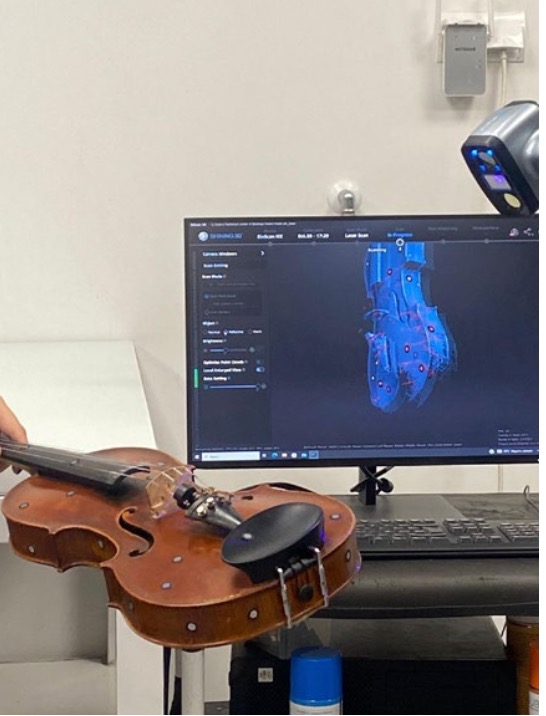
This project is based on the redesign of a previously developed electric Violin Redesign This project is based on the redesign of a previously developed electric violin, with the aim of improving both its functionality and ergonomics, adapting it to the musician’s specific needs. The methodology employed is grounded in reverse engineering: starting from a 3D scan of a real acoustic violin (Figure 1), aesthetic and functional modifications were applied to adapt it to the particular characteristics of the electric violin, which lacks a resonance box and has a different weight distribution.
2.2. Violin manufacturing
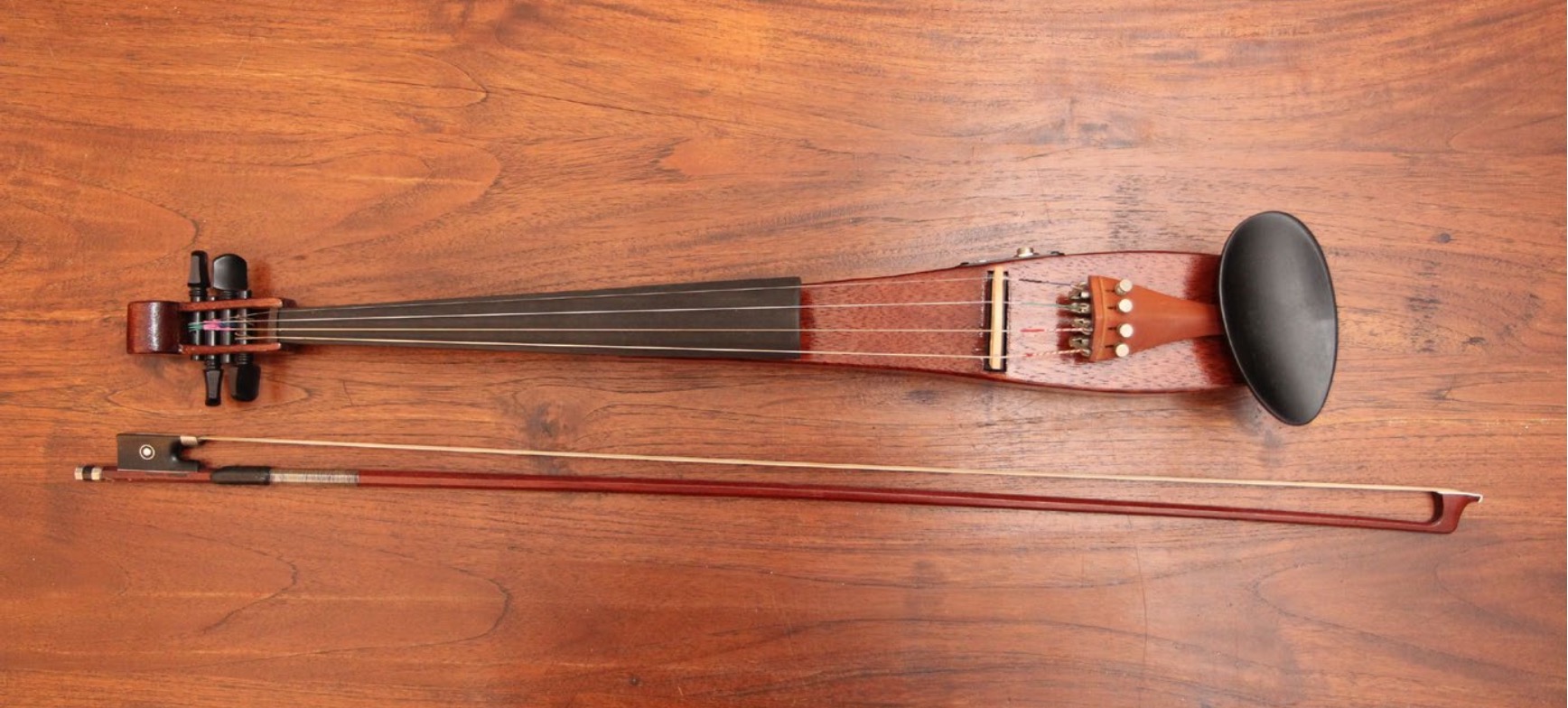
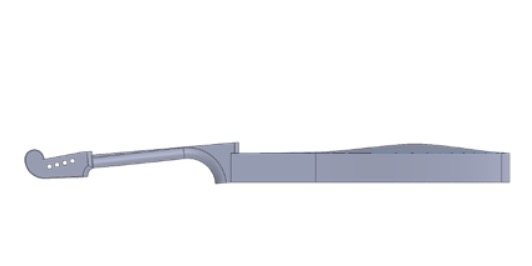
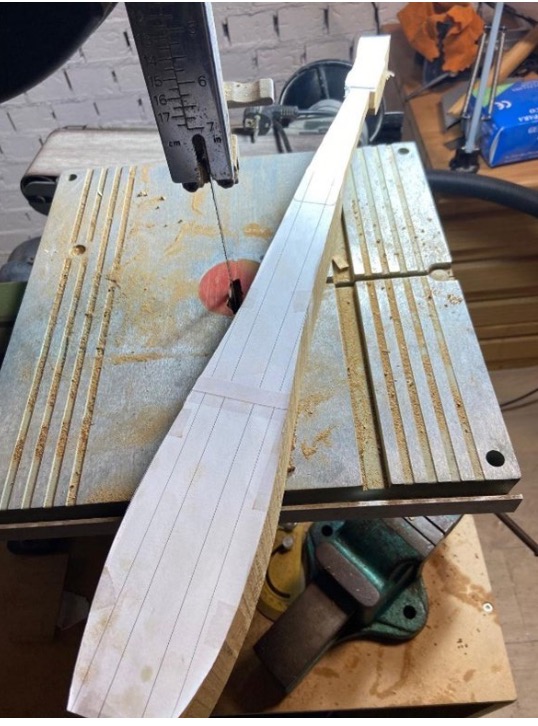
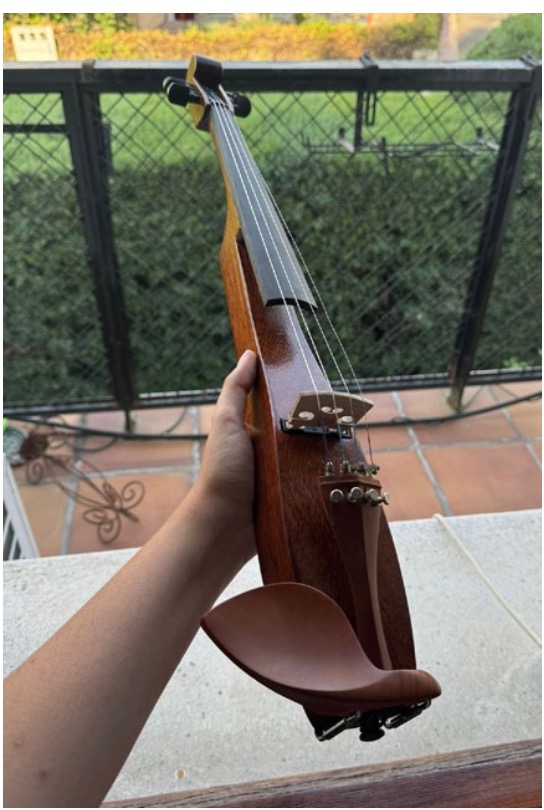
The manufacturing process was entirely manual, using traditional woodworking techniques. Starting from a block of iroko wood, the plans designed in SolidWorks were followed to accurately cut the violin’s silhouette. Subsequently, cavities for the electronics were created, details were filed, the wood was stained and varnished, and finally the instrument was assembled with its components (bridge, pegs, strings, etc.). This approach resulted in a robust, ergonomic, and visually appealing violin, meeting the standards of a functional instrument (Figure 3).
2.3. Design and Simulation of the Amplifier Circuit
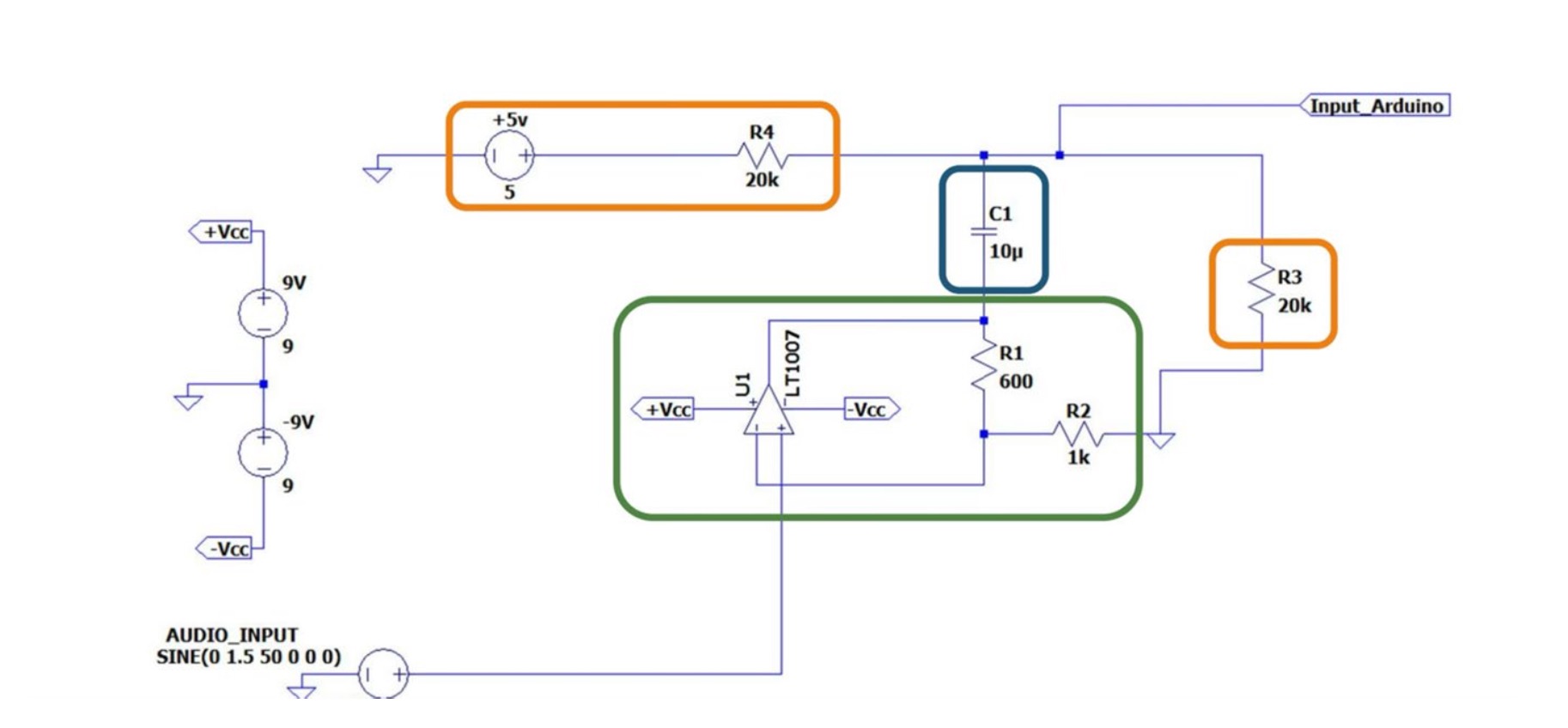
A key part of the project was the development of an amplifier circuit that would allow the Arduino to correctly interpret the signal from the electric violin. Since the microcontroller requires a minimum signal of 2.5 V to detect a high value (“HIGH”), it was necessary to amplify the sinusoidal output signal from the piezoelectric sensor (which barely reached ±0.06 V) and add an offset to centre it within the 0-5 V range.
To achieve this, a circuit was designed using an operational amplifier in a non-inverting configuration. The necessary resistors were calculated to obtain adequate gain, and a voltage divider was added to apply the offset. Additionally, a capacitor was incorporated as a high-pass filter to stabilize the signal and reduce noise.
The entire circuit was simulated in LTSpice (Figure 4), validating that the output signal properly crossed the Arduino threshold and remained within the desired range.
2.4. Integration of the Arduino System
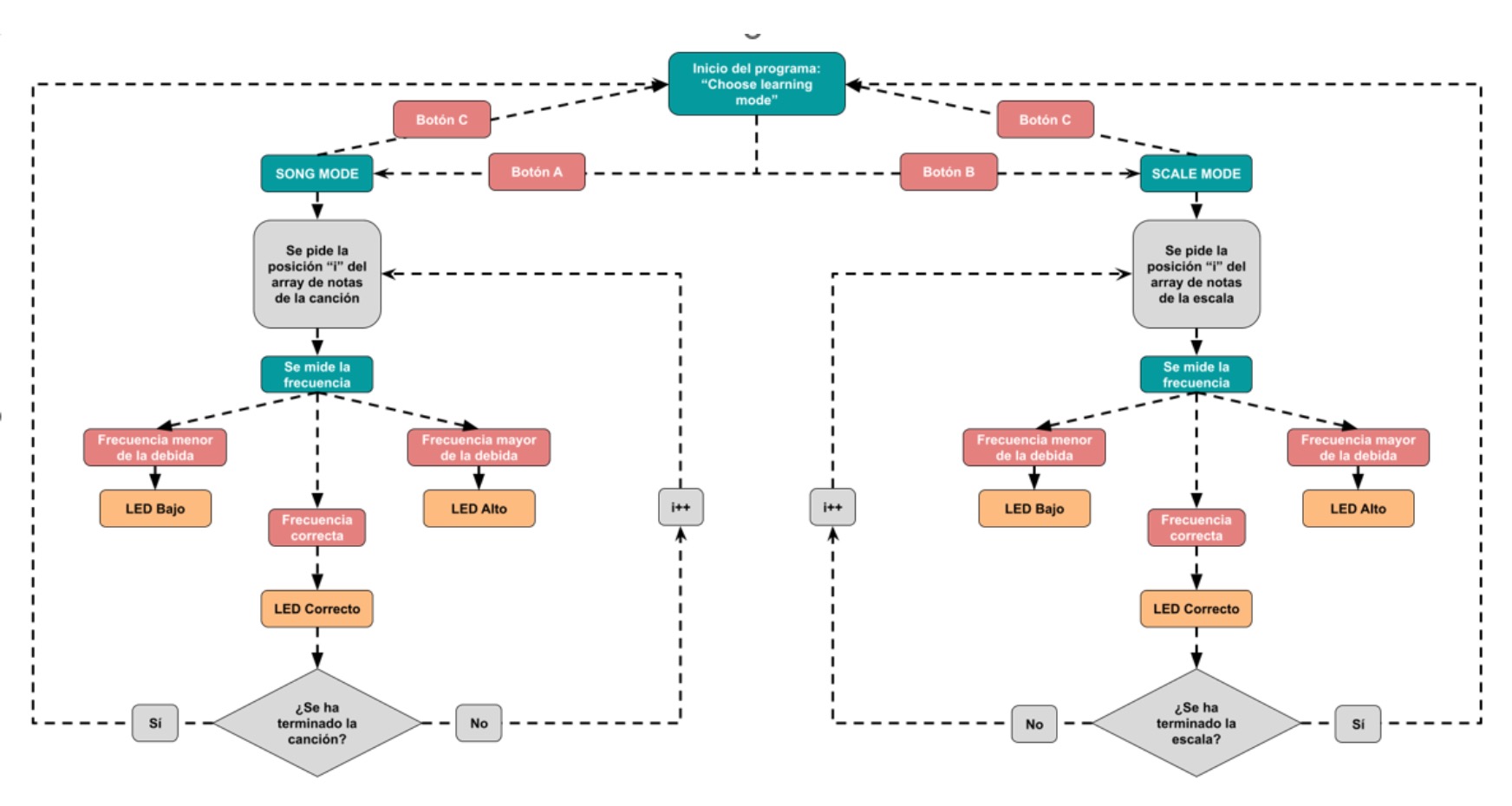
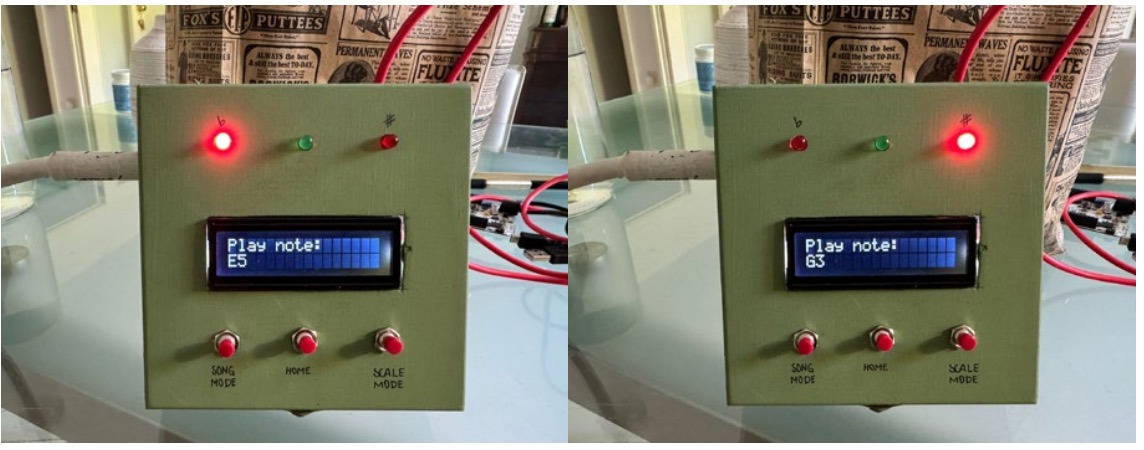
The signal processed by the amplifier circuit is received by an Arduino Uno board, which calculates the frequency of the played note by measuring the signal period (HIGH and LOW times). Based on this measurement, the program compares the detected frequency with notes from a predefined scale, displaying it on a screen and indicating via leds whether it is above or below the desired value.
During code development, the use of complex algorithms such as FFT was avoided, prioritizing simple timing-based methods. The system includes a 3% error margin to tolerate slight tuning deviations and microcontroller response times.
The program design is modular, allowing future modifications. Tests have confirmed that despite the limitations of the Arduino Uno, the system is functional, fast, and capable of correctly interpreting the violin’s signals (Figure 5).
2.5. Development of the customized ergonomic accessory
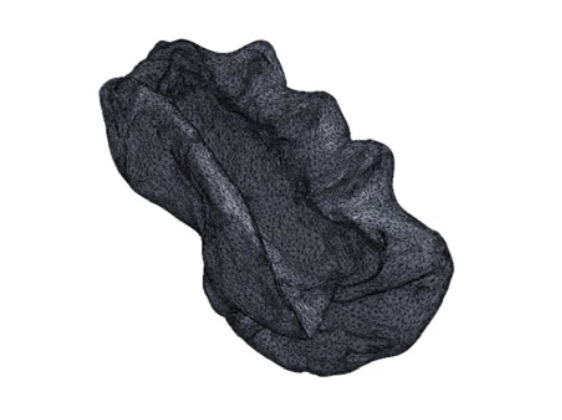
To improve the musician’s comfort and technique, a customized ergonomic accessory was designed using reverse engineering techniques. Starting from a mold of the performer’s hand in playing position, the model was scanned using 3D technology and processed in SolidWorks, converting the point cloud into a mesh and finally into an editable solid model (Figure 6).
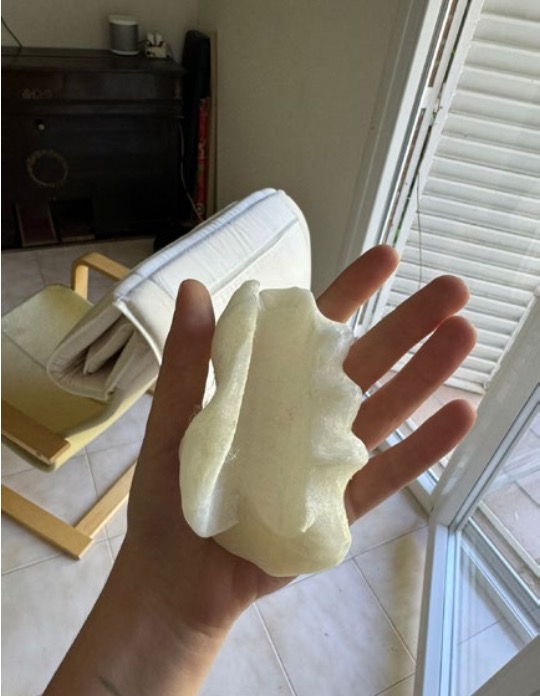
This design was 3D-printed using flexible PLA filament, which provides a soft, silicone-like texture, improving grip on the neck and enhancing the user experience. Personalization ensures not only greater ergonomics, but also improved learning from the earliest stages of practice.
3. RESULTS
3.1. Overall project results
The main outcome of this project is a fully functional, ergonomic electric violin equipped with didactic capabilities, designed from scratch with a strong focus on personalization and the enhancement of musical learning. The combination of accessible technologies such as Arduino, 3D scanning and printing, CAD modeling, and manual manufacturing has resulted in a unique prototype that addresses real problems observed during the early years of violin training.
The structural redesign of the violin made it possible to integrate complete electronics within its body without compromising balance nor ergonomics. The developed amplifier system ensures a clean signal from the piezoelectric element, enabling precise detection of the note performed. Thanks to careful design, an aesthetic very close to that of a traditional violin has been maintained, using noble materials and an artisanal finish (Figure 7).
One of the most notable outcomes is the development of a visual feedback system that indicates in real time whether the played note is in tune. Based on Arduino, the program measures the fundamental frequency of the signal and compares it with the expected note, activating leds to guide the performer (Figure 8). This function has proven particularly useful for beginner musicians, allowing them to tune without external assistance and correct errors instantly. The system has been successfully tested with the melody Twinkle, Twinkle, Little Star, following the Suzuki violin teaching method (Suzuki, 1978), but it can easily be expanded with other pieces or even automatic MIDI file reading.
Another major achievement is the fabrication of an ergonomic accessory adapted to the performer’s hand, modeled from a 3D scan of the physicalmold. Its design and manufacturing in flexible PLA help reduce unnecessary wrist tension and improve left-hand positioning, especially among beginner students (Figure 9). Initial tests have shown improvements in grip and comfort, as well as greater naturalness in technical execution.
3.2. Pedagogical impact and future outlook
The developed violin not only enhances the physical experience of playing the instrument, but also transforms the learning process. The direct interaction between musician and electronic system creates a more autonomous and dynamic study environment. Common tuning or fingering errors can be corrected in real time, accelerating technical progress and increasing student motivation.
Furthermore, the project’s modular architecture allows for future expansions, such as the incorporation of additional melodies, practice modes, or even graphical visualization on external displays. This opens the door to a more immersive, personalized, and accessible approach to music education.
3.3. Additional considerations
Although this project is rooted in a strong artisanal tradition, it also raises valuable questions about the future of musical learning. Special care was taken to ensure that the instrument’s design complements rather than replacing the classical violin, maintaining its aesthetics and proportions. The decision to reuse materials (such as already available iroko wood) and to apply sustainable techniques in woodworking and 3D printing helped reduce the environmental impact of the manufacturing process.
On a social level, this type of development promotes interdisciplinary collaboration among engineers, musicians, and educators, breaking with the traditional separation between technology and art. In this way, the foundations are laid for new models of educational instruments, designed by and for those who use them.
4. CONCLUSION
The project of designing and manufacturing an electric violin with real-time feedback and customized ergonomic accessories carries profound ethical, anthropological, social, and environmental implications. The preservation of musical traditions, the democratization of access to music education, and the promotion of innovation are positive and significant aspects. However, challenges also exist related to the digital divide, material sustainability, and waste management.
From an ethical perspective, it is essential to approach the project in a manner that respects and honours cultural traditions while exploring new technological possibilities. Anthropologically, the project can enrich the musical experience by offering personalized solutions that improve musicians’ ergonomics and comfort. Socially, it holds the potential to foster inclusion and community participation, while also acknowledging challenges related to unequal access to technology. Environmentally, the selection of sustainable materials, the implementation of responsible manufacturing practices, and the management of electronic waste are crucial to minimizing negative impact.
In summary, this project not only seeks to innovate in the field of musical instruments, but to do so in a conscious and responsible manner, taking into account the multiple dimensions that affect both individuals and the environment in which they develop.
REFERENCES
Allende Aguilera, P. (2016). Consideraciones sobre la motricidad del violinista: efectos de su sobrecarga y propuestas para su tratamiento y evolución.
Betancur Rodríguez, M. A. (2011). Ingeniería inversa aplicada: metodología y aplicaciones industriales.
Borja, M. Á. & Camargo, J. E. (2024). Music software with a Machine Learning-based feedback system as an alternative for initial piano study in children. Inteligencia artificial, pp. 92–110.
Galamian, I. (1962). Principles of violin playing and teaching.
Pérez-Hernández, G., Ojeda-Rosas, J. E., González-Guevara, M., Gallegos-Ortega, O., LópezVázquez, P. G. & CapillaGonzález, G. (2022). Uso de escaneo 3D y manufactura aditiva para el prototipado de órtesis. Jóvenes En La Ciencia, pp. 1–9. Suzuki, S. (1978).
Suzuki violin school. Violin part (Vol. 1). Miami: Summy-Birchard.
Tejada Giménez, J. (2004). Música y mediación de la tecnología en sus procesos de aprendizaje. Educación XXI, 15, pp. 26–36.
